
Often I catch myself wondering, “Is this really how I want to spend my time right now?”
It happened when that older Kenyan banker followed me around a club asking me if I knew who he was. It happened when I chose to spend my first New Years Eve, Thanksgiving, and Christmas alone. It’s happened many times in Nairobi when I’ve been out and seen everyone sitting at high tables with their bottles of liquor and not dancing for hours. It’s happened when I’ve landed in countries I’d never thought of visiting and knew very little about - I’d arrive in my hotel room, close the door, and say out loud, “What the fuck am I doing?” And lately, it’s happened many times mid-interview or halfway through conference panels.
The full-time strategist inhabits a rare role. How many other jobs let you learn every day, express yourself, work with creative minds, and develop your own critical thinking skills while earning a decent salary? But for me, even though strategy gives me an intellectual kick, the most interesting thing about it has always been people.
Too Much Theory Goes Nowhere
Most conference panels jog on the spot: awkward self-introductions, people speaking over each other then quickly performing politeness (“Oh sorry, you speak”), vague and wordy questions that try to sound zeitgeisty but confuse the room, panelists answering every question even when they have nothing to add, company talking points lifted from press releases, and a litany of jargon and buzzwords.
Where’s the personality? Where are the rare truths? Where are the hot takes?
When I’m on these panels, I try to short-circuit them by asking the other panelists to talk about people, not just their theories. For example: What’s the most unusual behavior you’ve ever come across in your research?
Many interviews I’ve done recently lose me halfway through. Maybe that’s partly my fault because I’ve written a book about strategy. But sometimes I get the sense interviewers are trying to meet a fantasy intellectual version of me, when I’d probably rather talk about some weird shit I saw on the street five minutes earlier or a new Afrobeats song I can’t stop playing.
I earn a living by sharing a point of view on strategy - how to think, how to define things, how to express ideas - but the point of all of it is to get inside human behavior and the mind. From a martial arts point of view, it’s the difference between debating the finer points of a kata versus sparring.
Lately, I think that’s why some of these conversations have left me feeling in between. I can do them. I know how to sound like myself in them. I know how to offer a clean idea, a framework, a useful phrase. But part of me is often somewhere else, tugged towards life as it’s actually being lived - the street, the club, the awkward interaction, the song, the strange little behavior that reveals how people really are. Maybe that’s the tension I keep feeling. Not that strategy bores me, but that strategy becomes limp when it loses contact with life.
And maybe that’s why cities like Nairobi and Lagos and Medellín have felt clarifying. So much of what’s interested me in these cities has had nothing to do with theory and everything to do with watching people who are alive with energy I’m new to: how they sit, when they dance, how they dress, how they flirt, how they wait, how they perform status, how they let go, how they talk about money. That, to me, is strategy’s raw material.
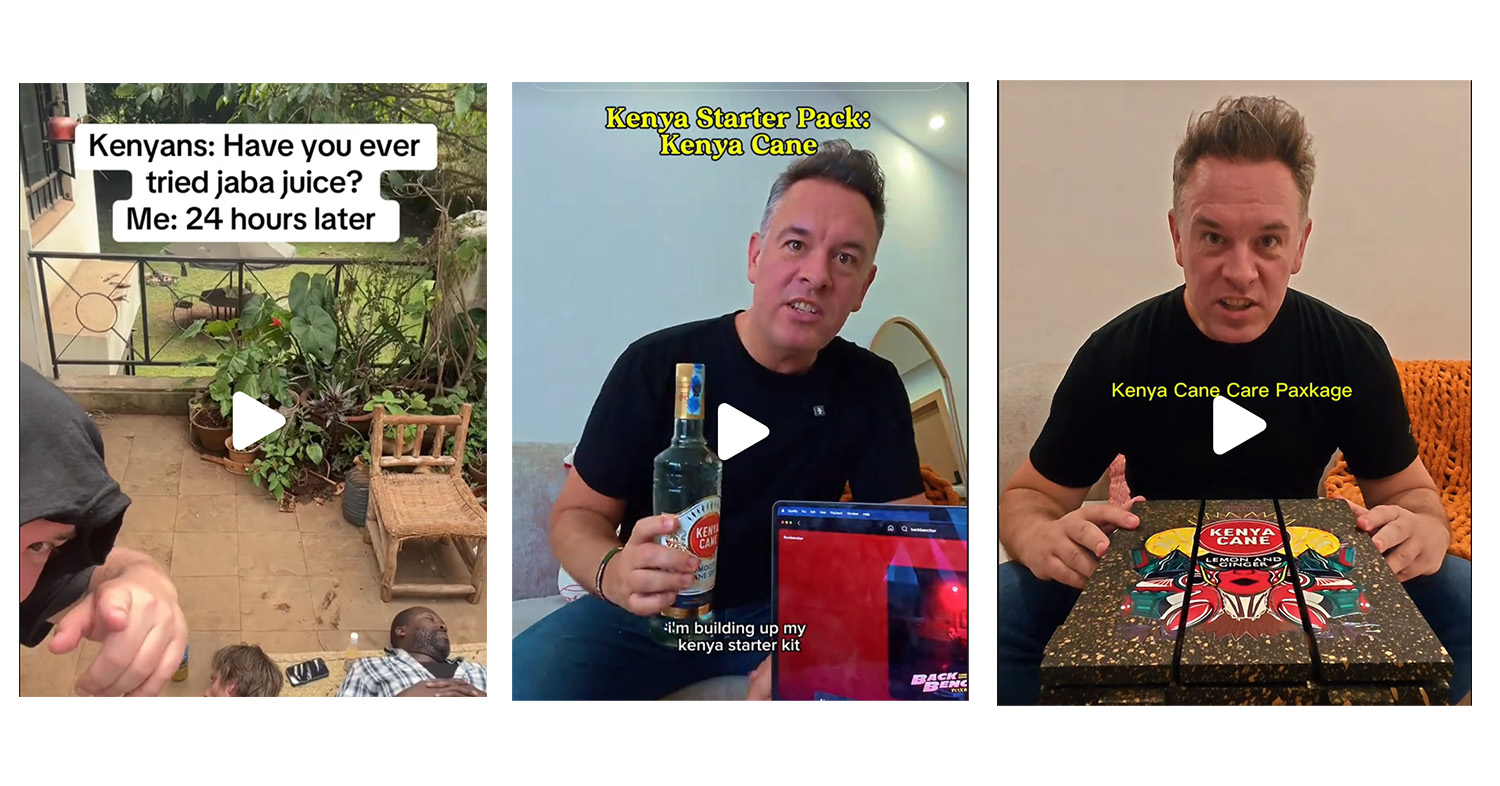
Over the past month, my videos about Africa on Instagram, TikTok, and YouTube have had millions of views. Talking about a liquor called Kenya Cane (for example, this unboxing video) has led to me being recognized on the streets of Nairobi most days. Discussing Nigerian “give me money” culture led to me being on the national news in Nigeria. While I’ve had help writing many of these videos, they are embarrassingly simple. And I’ve felt guilty as I’ve pushed beyond the strategy topic into cultural observations. But the reactions from people light me up.
How Close Can You Get?
Most panels and interviews I’ve been part of lately include a section on artificial intelligence. A common question is, What will happen to the strategist as these AI tools develop? Part of any reasonable answer should involve strategists getting away from their computers and getting closer to human behavior.
For example, if I talk with ChatGPT about the nights out I’ve had in Nairobi - especially nights where hundreds of people have sat for hours while a DJ has played - it might tell me that nights in Nairobi start slowly. But watching those behaviors up close completes the picture.
Nairobi loves liquor and takes shots early, often in a squadron of shots. Many venues are packed with furniture because tables full of liquor make money. Waiters move chairs and tables on their heads and shoulders as the room’s shape changes with the arrival and departure of guests. Waiters ask if you want your drink cold or room temperature. Some put two drinks on your table instead of one so they can close the next sale early. Sheesha appears and creates a whole other set of dynamics. A few people dance close to their tables, but tables are prizes, so people don’t stray far. In fancy areas, politicians, actors, and celebrities occupy the furniture, which leads to a lot of people scanning the room to see who else is there.
Eventually, a few people head to the dance floor while others take power naps at their tables. Some people call this swatching or reloading. (“Swatch” means “sleep” in the Sheng language). Then the night kicks on and it could take you to three other venues. Some people might have stocked up on a local stimulant called jaba juice, which keeps them awake for a long time. Many will party through the night, joking that there should be a day between Sunday and Monday, that Kenyans do not really do Mondays, and that they are definitely quitting alcohol like they said they would the last few weekends.
A lot of these behaviors are new to me. Maybe I could prompt-engineer my way towards some of these observations. But until I’ve seen them in the flesh, been confused by them, and had them explained to me, they remain theoretical. And when they remain theoretical they’re limp. They’re hard to bring to life in a way that might electrify people.
The Theory Is Not the Point
Yes, there can be an intellectualism to strategy work. But for it not to go limp, it needs to stay closer to real talk, hot takes, and the street than to theory alone. Theory is there to help you focus on what matters. Spoiler alert, what matters is the people, which is where I’m loving spending my time right now.
And, as I prepare to return to the USA before teaching in Asia and Europe, I can tell you that Africa - and Kenya in particular - is very much on mind as somewhere that I need to spend more time. Africa isn’t easy but the youth population, the energy, and the sense of what could be are unlike most other places I’ve visited.

