
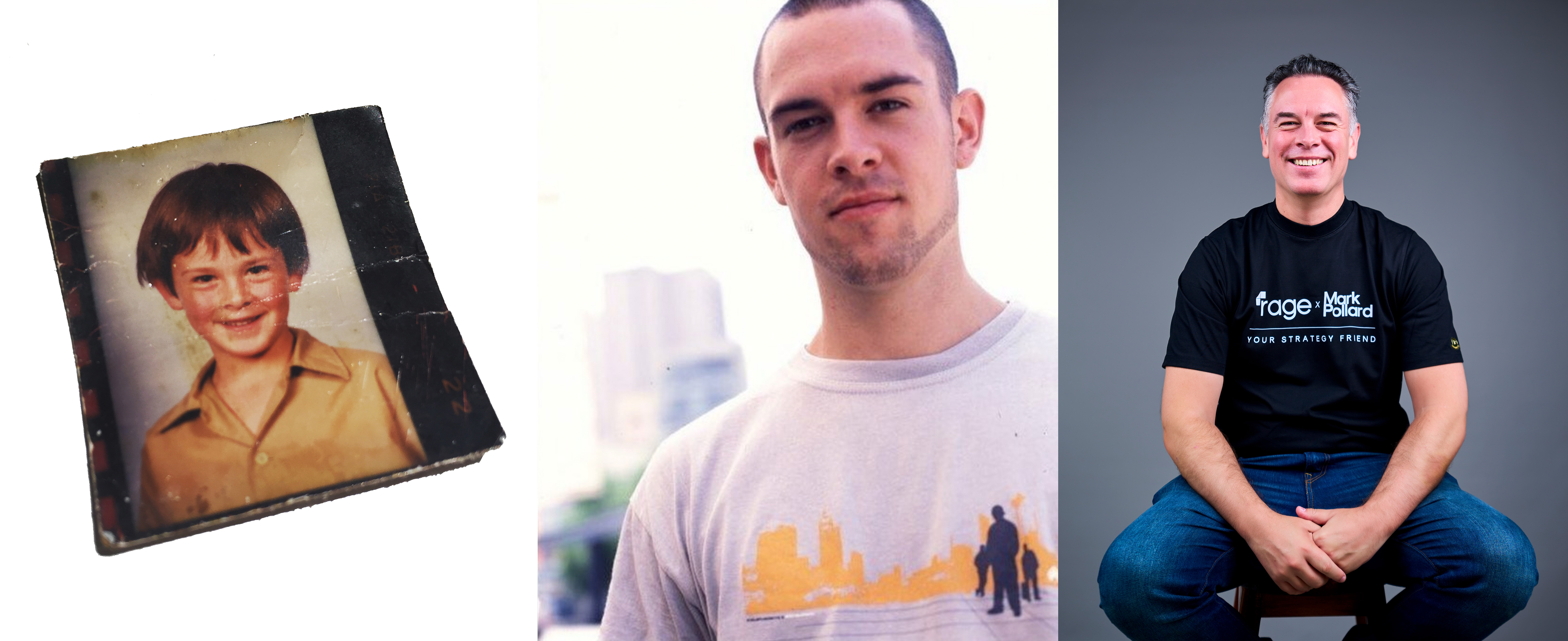
Sometimes, I shut down and disappear.
As a child, I disappeared into writing poetry and raps and journaling. In my twenties, I disappeared into work. I published a magazine while often also working a job. For years, I worked until I fell asleep at my desk then I woke up and I kept working. Many nights, I could only fully fall asleep on the floor in front of the television with the sound of a late-night show or white noise soothing my mind.
I have always felt the world in an intense way. People have called me complex. They have called me sensitive. Both are true but I didn’t make myself that way. And, every now and then, I wonder, “Why do I spend so much time trying to understand people when few people try to understand me?”
Strategists are supposed to see patterns. We are trained to notice them in culture, in brands, and in behavior. Yet many people with strategist brains struggle to see the patterns shaping their own lives. Or they see them clearly and still cannot interrupt them.
A Simple Framework To See Your Own Patterns Through
When I teach insights, I ask people to think about a big life change they have made in recent years. We then discuss how this change happened, the routine it broke, and how their behavior changed. In other words:
1. Routine What was happening in your life before the epiphany? What habits, rhythms, relationships, or assumptions had become normal?
2. Inciting incident What happened to force the epiphany? This might have been one dramatic event, a slow build-up, or even something small - a conversation, a video, a sentence that landed at the right time.
3. Epiphany What did you realize? What truth became difficult to ignore?
4. Behavior change How did you change your behavior?
My Epiphanies On The Road
In 2023, I realized that I knew how to be happy. I realized this because I travelled to new countries and I saw photos and videos of myself happy. I had had my head down working in New York, trying to be a decent dad, and trying to build a business. But the financial stress, the pandemic, and certain relationship dynamics sat on my shoulders like a rhinoceros. They sunk me. My chest was often tight. All I could do was repeat the pattern I grew up with so I disappeared into my podcast, I wrote a book, and I published a lot of social media content.
Travel introduced me to another person inside of me. I fell in love with new music, languages, food, and cultures. I started dancing again after years of feeling frozen. But the old pattern still had a grip on me.
I visited Brazil for a friend’s 40th birthday party but I froze and I didn’t dance because I wasn’t sure of the social dynamics. I wanted to dance salsa every day in Colombia but I couldn’t bring my body to do it. In Kenya, I had a lot of boundaries crossed in my first few weeks here. People asked for money. They tried to find angles with me. It put me on high alert. I’d been robbed in Colombia a few months before and I’d just dealt with the aggressive begging culture of Nigeria. And I found myself literally getting up and leaving many situations.
In moments like these, I can feel my chest close, my heartbeat rise, and then I just walk. It’s hard to catch myself as it happens and it’s led me to spending less time with people I really like. Sometimes, I try to talk to myself as it happens: “Calm down and go back. Calm down and go back.” But my self-regulation isn’t as strong as it needs to be, especially if a drink has been involved. And, usually, this reaction happens in a group situation or in a crowd. I prepare for the worst.
Recently, I shut down in Ho Chi Minh City. I was with a university friend that I hadn’t hung out with for 20 years. I just wasn’t into the music or the crowd. The next day, I texted him and said, “Sorry about last night. My mood dropped.” And he said: “We’ll know we have a real friendship when we don’t have to apologize for ourselves.”
That stayed with me.
I’ve been lucky to build a social circle around the world with people who can hold me in the way I can hold them. If you’ve worked with me or had me teach you, I hope you’ve seen up close that I am decent at allowing people to be themselves, to be vulnerable, and to explore difficult topics. I do wonder why I don’t spend more time near these friends but I continue to move because moving helps me not get stuck in my feelings.
So, even though I believe I know how to feel happy now, I still fall back into old patterns that sabotage me. If I sense rejection or abandonment or a lack of safety or someone trying to find an angle, my triggers prepare themselves.
One response would be to keep moving. This is something I think of any time I run into conflict - “Let’s go”. Another response would be to work harder to catch myself in these situations or to think more intentionally about which situations I put myself in.
I do not think the answer is to judge myself for being sensitive, complex, or easily overstimulated. I did not make myself that way. But I do think I have a responsibility to understand the patterns that come with that wiring.
Strategists are trained to spot patterns in the world. The harder task is interrupting the ones running your own life.
Insight is not intervention. You can name a pattern, teach a pattern, even warn yourself about a pattern, and still obey it. The work, I think, is to catch yourself a little earlier - to notice when the body starts to close, when the old story starts talking, and when leaving begins to feel wiser than staying because you might not just be leaving a situation, you might end up leaving a friendship.
You can also find this article on Instagram.

