<?xml version="1.0" encoding="utf-8"?><feed xmlns="http://www.w3.org/2005/Atom" ><generator uri="https://jekyllrb.com/" version="3.10.0">Jekyll</generator><link href="https://www.markpollard.net/feed.xml" rel="self" type="application/atom+xml" /><link href="https://www.markpollard.net/" rel="alternate" type="text/html" /><updated>2026-03-25T12:16:18+00:00</updated><id>https://www.markpollard.net/feed.xml</id><title type="html">Mark Pollard</title><subtitle>Strategy is Your Words</subtitle><entry><title type="html">To Talk About Strategy Is To Talk About People</title><link href="https://www.markpollard.net/to-talk-strategy-is-to-talk-people" rel="alternate" type="text/html" title="To Talk About Strategy Is To Talk About People" /><published>2026-03-25T12:11:00+00:00</published><updated>2026-03-25T12:11:00+00:00</updated><id>https://www.markpollard.net/to-talk-about-strategy-is-to-talk-about-people</id><content type="html" xml:base="https://www.markpollard.net/to-talk-strategy-is-to-talk-people"><![CDATA[<p><img src="/uploads/africa-content-substack.jpg" alt="africa-content-substack.jpg" /></p>

<p>Often I catch myself wondering, “Is this really how I want to spend my time right now?”</p>

<p>It happened when that older Kenyan banker followed me around a club asking me if I knew who he was. It happened when I chose to spend my first New Years Eve, Thanksgiving, and Christmas alone. It’s happened many times in Nairobi when I’ve been out and seen everyone sitting at high tables with their bottles of liquor and not dancing for hours. It’s happened when I’ve landed in countries I’d never thought of visiting and knew very little about - I’d arrive in my hotel room, close the door, and say out loud, “What the fuck am I doing?” And lately, it’s happened many times mid-interview or halfway through conference panels.</p>

<p>The full-time strategist inhabits a rare role. How many other jobs let you learn every day, express yourself, work with creative minds, and develop your own critical thinking skills while earning a decent salary? But for me, even though strategy gives me an intellectual kick, the most interesting thing about it has always been people.</p>

<h1 id="too-much-theory-goes-nowhere">Too Much Theory Goes Nowhere</h1>

<p>Most conference panels jog on the spot: awkward self-introductions, people speaking over each other then quickly performing politeness (“Oh sorry, you speak”), vague and wordy questions that try to sound zeitgeisty but confuse the room, panelists answering every question even when they have nothing to add, company talking points lifted from press releases, and a litany of jargon and buzzwords.</p>

<p>Where’s the personality? 
Where are the rare truths? 
Where are the hot takes?</p>

<p>When I’m on these panels, I try to short-circuit them by asking the other panelists to talk about people, not just their theories. For example: What’s the most unusual behavior you’ve ever come across in your research?</p>

<p>Many interviews I’ve done recently lose me halfway through. Maybe that’s partly my fault because I’ve written a book about strategy. But sometimes I get the sense interviewers are trying to meet a fantasy intellectual version of me, when I’d probably rather talk about some weird shit I saw on the street five minutes earlier or a new Afrobeats song I can’t stop playing.</p>

<p>I earn a living by sharing a point of view on strategy - how to think, how to define things, how to express ideas - but the point of all of it is to get inside human behavior and the mind. From a martial arts point of view, it’s the difference between debating the finer points of a kata versus sparring.</p>

<p>Lately, I think that’s why some of these conversations have left me feeling in between. I can do them. I know how to sound like myself in them. I know how to offer a clean idea, a framework, a useful phrase. But part of me is often somewhere else, tugged towards life as it’s actually being lived - the street, the club, the awkward interaction, the song, the strange little behavior that reveals how people really are. Maybe that’s the tension I keep feeling. Not that strategy bores me, but that strategy becomes limp when it loses contact with life.</p>

<p>And maybe that’s why cities like Nairobi and Lagos and Medellín have felt clarifying. So much of what’s interested me in these cities has had nothing to do with theory and everything to do with watching people who are alive with energy I’m new to: how they sit, when they dance, how they dress, how they flirt, how they wait, how they perform status, how they let go, how they talk about money. That, to me, is strategy’s raw material.</p>

<p>Over the past month, my videos about Africa on <a href="http://www.instagram.com/markpollard">Instagram</a>, <a href="https://www.tiktok.com/@markpollardyeah">TikTok</a>, and <a href="https://www.youtube.com/@markpollardstrategyfriend/">YouTube</a> have had millions of views. Talking about a liquor called Kenya Cane (for example, <a href="https://www.tiktok.com/@markpollardyeah/video/7618651649074072863">this unboxing video</a>) has led to me being recognized on the streets of Nairobi most days. Discussing Nigerian “give me money” culture led to me being on the national news in Nigeria. While I’ve had help writing many of these videos, they are embarrassingly simple. And I’ve felt guilty as I’ve pushed beyond the strategy topic into cultural observations. But the reactions from people light me up.</p>

<h1 id="how-close-can-you-get">How Close Can You Get?</h1>

<p>Most panels and interviews I’ve been part of lately include a section on artificial intelligence. A common question is, What will happen to the strategist as these AI tools develop? Part of any reasonable answer should involve strategists getting away from their computers and getting closer to human behavior.</p>

<p>For example, if I talk with ChatGPT about the nights out I’ve had in Nairobi - especially nights where hundreds of people have sat for hours while a DJ has played - it might tell me that nights in Nairobi start slowly. But watching those behaviors up close completes the picture.</p>

<p>Nairobi loves liquor and takes shots early, often in a squadron of shots. Many venues are packed with furniture because tables full of liquor make money. Waiters move chairs and tables on their heads and shoulders as the room’s shape changes with the arrival and departure of guests. Waiters ask if you want your drink cold or room temperature. Some put two drinks on your table instead of one so they can close the next sale early. Sheesha appears and creates a whole other set of dynamics. A few people dance close to their tables, but tables are prizes, so people don’t stray far. In fancy areas, politicians, actors, and celebrities occupy the furniture, which leads to a lot of people scanning the room to see who else is there.</p>

<p>Eventually, a few people head to the dance floor while others take power naps at their tables. Some people call this swatching or reloading. (“Swatch” means “sleep” in the Sheng language). Then the night kicks on and it could take you to three other venues. Some people might have stocked up on a local stimulant called jaba juice, which keeps them awake for a long time. Many will party through the night, joking that there should be a day between Sunday and Monday, that Kenyans do not really do Mondays, and that they are definitely quitting alcohol like they said they would the last few weekends.</p>

<p>A lot of these behaviors are new to me. Maybe I could prompt-engineer my way towards some of these observations. But until I’ve seen them in the flesh, been confused by them, and had them explained to me, they remain theoretical. And when they remain theoretical they’re limp. They’re hard to bring to life in a way that might electrify people.</p>

<h1 id="the-theory-is-not-the-point">The Theory Is Not the Point</h1>

<p>Yes, there can be an intellectualism to strategy work. But for it not to go limp, it needs to stay closer to real talk, hot takes, and the street than to theory alone. Theory is there to help you focus on what matters. Spoiler alert, what matters is the people, which is where I’m loving spending my time right now.</p>

<p>And, as I prepare to return to the USA before teaching in Asia and Europe, I can tell you that Africa - and Kenya in particular - is very much on mind as somewhere that I need to spend more time. Africa isn’t easy but the youth population, the energy, and the sense of what could be are unlike most other places I’ve visited.</p>]]></content><author><name></name></author><category term="Strategy" /><summary type="html"><![CDATA[]]></summary><media:thumbnail xmlns:media="http://search.yahoo.com/mrss/" url="https://www.markpollard.net/uploads/africa-content-substack.jpg" /><media:content medium="image" url="https://www.markpollard.net/uploads/africa-content-substack.jpg" xmlns:media="http://search.yahoo.com/mrss/" /></entry><entry><title type="html">Is “Strategist” A Personality Type?</title><link href="https://www.markpollard.net/the-strategist-personality-type" rel="alternate" type="text/html" title="Is “Strategist” A Personality Type?" /><published>2026-03-18T11:33:00+00:00</published><updated>2026-03-18T11:33:00+00:00</updated><id>https://www.markpollard.net/is-strategist-a-personality-type</id><content type="html" xml:base="https://www.markpollard.net/the-strategist-personality-type"><![CDATA[<p><img src="/uploads/mark-pollard-old.jpg" alt="mark-pollard-old.jpg" /></p>

<p>In my teens and 20s, I didn’t feel I belonged in this world. I didn’t like the systems, the conformity, the establishment.</p>

<p>Maybe because I shifted between my parent’s two homes and I was often not at home from a young age, I felt more comfortable roaming Sydney than in rooms I take for granted today.</p>

<p>This caused a lot of internal turbulence. I literally didn’t feel I was built to be here. And I had days when I struggled to want to be here.</p>

<p><img src="/uploads/magazine-covers.jpg" alt="magazine-covers.jpg" /></p>

<p>I found a home in the underground hip hop scene and I then published a hip hop magazine (Stealth Magazine) and I hosted a radio show (The Mothership Connection).</p>

<p>I also worked in and around advertising from the age of 20.</p>

<p>But, because I didn’t feel I belonged anywhere, I also didn’t think about having a career. I didn’t think I belonged in a career.</p>

<p><img src="/uploads/strategists.jpg" alt="strategists.jpg" /></p>

<p>At first, I did UX and content strategy. I loved it. I could lose myself in research and thinking. I loved the immediacy of the Internet and the lack of gatekeepers.</p>

<p>At 28, I took a job in which I did 50% of this work and 50% account planning at Leo Burnett.</p>

<p>Leo Burnett Sydney was my peak advertising experience. Nearly everyone I worked with has gone onto big things or more meaningful things. You might recognize some of the faces above.</p>

<p>But, in my head, I was still doing hip hop stuff and I happened to have a job.</p>

<p><img src="/uploads/saatchi-mates.jpg" alt="saatchi-mates.jpg" /></p>

<p>In 2011, I moved to New York to briefly work at Saatchi and Saatchi. This is when I almost saw advertising as a career.</p>

<p>The problem was that the industry was so volatile that it felt self-defeating to fully commit to it. And I was burnt out from working crazy hours in my 20s and with a young family, so I also didn’t spend enough time thinking about what else I could do. I just needed a change.</p>

<p>And a visa.</p>

<p><img src="/uploads/mark-with-shingy-cannes.jpg" alt="mark-with-shingy-cannes.jpg" /></p>

<p>Five years in New York agencies taught me that I am not built to be inside Corporate America.</p>

<p>For years, I had been writing about and teaching strategy and I loved this. But the politics, the lack of creative ambition that I encountered everywhere*, and the exceptionalism that didn’t match the output drove me nuts.</p>

<p>*Except at Big Spaceship</p>

<p><img src="/uploads/mark-london.jpg" alt="mark-london.jpg" /></p>

<p>Also, I struggled to build social circles.</p>

<p>I was often the young guy in a management team and parents with kids my kids’ ages were usually 10-20 years older than me, more corporate and conservative.</p>

<p>I didn’t like Corporate America. My social life was barely alive. I was just working.</p>

<p>I felt stuck. I felt trapped.</p>

<p><img src="/uploads/mark-anthony-bourdain.jpg" alt="mark-anthony-bourdain.jpg" /></p>

<p>But there were clues - including, yes, from Anthony Bourdain. He showed a path - a more savage voice, adventures, and risk-taking.</p>

<p>Five years into my time in New York, I set up a company. At first, the goal was simple: break even on living in NYC.</p>

<p>Then I thought back to my hip hop days and rebuilt what I used to do in hip hop but in strategy: an online community, a podcast, events, books. <a href="http://www.sweathead.com">Sweathead</a>.</p>

<p><img src="/uploads/mark-uk-julian.jpg" alt="mark-uk-julian.jpg" /></p>

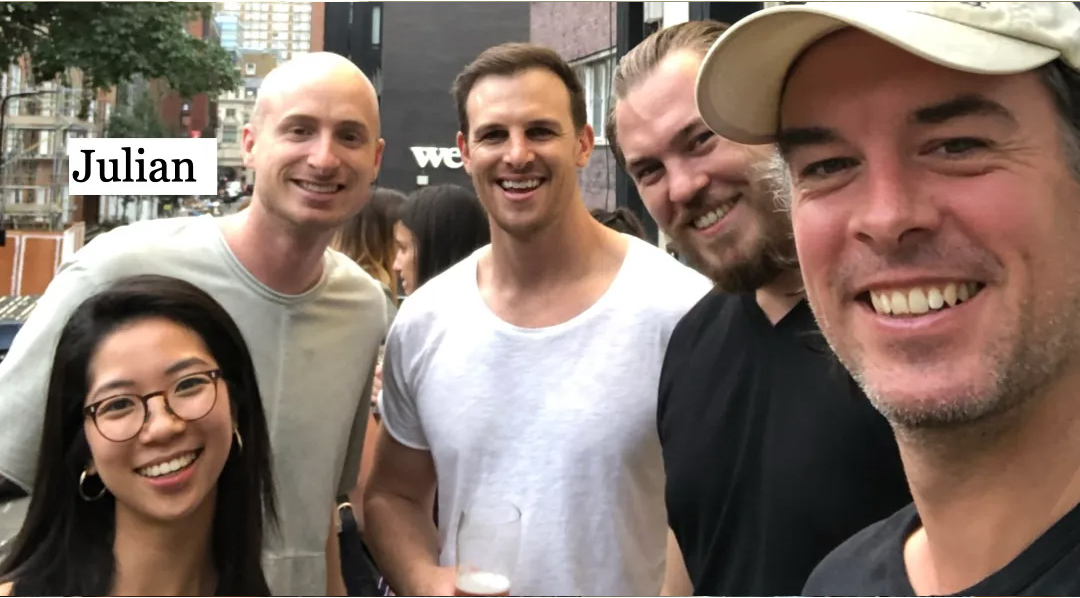
<p>And I hit the road. I taught, I spoke at conferences. And, in 2019, Julian Cole and I did a bunch of events in different countries.</p>

<p>After each event, I found myself having conversations that I didn’t really access in NYC. They filled me with satisfaction, even happiness.</p>

<p>I realized that strategists are my type. But that I have also have a type of strategist.</p>

<p><img src="/uploads/mark-friends-lisbon.jpg" alt="mark-friends-lisbon.jpg" /></p>

<p>Sure, there isn’t one strategist type.</p>

<p>But, having taught thousands of people in 40+ countries now, here’s the strategist type that lights me up:</p>

<h1 id="1-strategists-are-curious">1. Strategists are curious</h1>
<p>“Curiosity” is an expression of one of the Big 5 Personality Traits.</p>

<p>The traits are:</p>
<ul>
  <li><strong>Openness</strong> - Novelty, variety seeking</li>
  <li><strong>Conscientiousness</strong> - Hard-working</li>
  <li><strong>Extraversion</strong> - Energy derived externally</li>
  <li><strong>Agreeableness</strong> - More Yes or No</li>
  <li><strong>Neuroticism</strong> - Prone to dark emotions</li>
</ul>

<p>Behaviors:</p>
<ul>
  <li>Has deep interests,</li>
  <li>Has a range of interests,</li>
  <li>Asks questions.</li>
</ul>

<h1 id="2-strategists-listen">2. Strategists listen</h1>
<p>We’ve all worked with dominant personalities but strategists are usually good at slowing down conversations, probing, and waiting for words they can use.</p>

<h1 id="3-strategists-hold-space">3. Strategists hold space</h1>
<p>Interviewing people, hosting workshops, and discussing difficult topics with clients are all examples of this.</p>

<h1 id="4-strategists-can-bounce-through-many-disconnected-topics">4. Strategists can bounce through many disconnected topics</h1>
<p>Since strategists tend to be curious and they tend to collect a lot of information and life experiences, they are often able to shift between topics faster than most people.</p>

<p>Yes, this can lead other people to think that they are in the clouds and don’t always make sense.</p>

<p>But, if you’re like this, it’s fun.</p>

<h1 id="5-strategists-dont-always-rush-to-answers">5. Strategists don’t always rush to answers</h1>
<p>Strategists can handle ambiguity because they’re often looking at problems from many points of view at once.</p>

<p>Sure, the more you do strategy, the faster you can see patterns and appear adamant about solutions, but good strategists are happy to explore different threads without committing to one until they’re ready.</p>

<h1 id="6-strategists-are-empaths">6. Strategists are empaths</h1>
<p>In some ways, strategy has become a cool job that people want because, well, it’s cool.</p>

<p>But if a strategist isn’t interested in people, if they aren’t on the side of people, they might struggle in creative circles.</p>

<p>In political and propaganda circles, they might thrive.</p>

<h1 id="7-strategists-can-self-doubt">7. Strategists can self-doubt</h1>
<p>Strategist self-doubt is cute.</p>

<p>Why? It keeps them open to improving, to better questions, and to not becoming dogmatic.</p>

<p>Obviously, I want strategists to be powerful and creative but a little self-doubt is healthy. It keeps people on their toes.</p>

<h1 id="8-strategists-connect-dots">8. Strategists connect dots</h1>
<p>Strategy is about finding and creating meaning.</p>

<p>We create meaning by combining at least two topics in a new way.</p>

<p>Strategists are constantly inhaling stimulus - interviews, content, academic research, etc.</p>

<p>Over time, they become good at creating meaning from all of this stimulus.</p>

<h1 id="9-strategists-can-have-a-sense-of-humor">9. Strategists can have a sense of humor</h1>
<p>Humor is cultural and, in some places I travel, everyone is very quiet and serious.</p>

<p>But my strategists can laugh - at the world, at themselves.</p>

<p>If they can’t laugh, I feel they might implode because they are taking everything too seriously.</p>

<h1 id="10-strategists-work-hard-and-smart">10. Strategists work hard and smart</h1>
<p>Perhaps due to social anxiety, many strategy teams I’ve worked with weren’t the first to the bar on a Friday afternoon to hang with the rest of the agency.</p>

<p>Strategists are often intellectually diligent but they can struggle outside of their work roles.</p>

<p>However, the smart ones are always looking for better ways to work.</p>

<p>Follow me on Instagram <a href="https://www.instagram.com/markpollard/">@markpollard</a>.</p>]]></content><author><name></name></author><category term="strategist" /><category term="Careers" /><summary type="html"><![CDATA[]]></summary><media:thumbnail xmlns:media="http://search.yahoo.com/mrss/" url="https://www.markpollard.net/uploads/mark-friends-lisbon.jpg" /><media:content medium="image" url="https://www.markpollard.net/uploads/mark-friends-lisbon.jpg" xmlns:media="http://search.yahoo.com/mrss/" /></entry><entry><title type="html">How To Know You Might Be A Strategist</title><link href="https://www.markpollard.net/are-you-a-strategist" rel="alternate" type="text/html" title="How To Know You Might Be A Strategist" /><published>2026-03-18T11:23:00+00:00</published><updated>2026-03-18T11:23:00+00:00</updated><id>https://www.markpollard.net/how-to-know-you-might-be-a-strategist</id><content type="html" xml:base="https://www.markpollard.net/are-you-a-strategist"><![CDATA[<p><img src="/uploads/strategists.jpg" alt="strategists.jpg" /></p>

<p>“I fell into strategy” is a common strategist refrain. “I was working in an agency in another department and someone said I might be better suited as a strategist” is a sentence that often comes next.</p>

<p>Truth is, a lot of people who end up in strategy didn’t know it was a career until they were in their twenties.</p>

<p>Yes, the USA has a lot of advertising courses in college (or, university) so it’s different here. In Australia, I don’t know if I worked with anyone who did a 3- or 4- year degree in advertising. It was rare.</p>

<p>Anyway, there are a few clusters of traits and behaviors that are common with many strategists. Here are the ones I see most:</p>

<h1 id="1-strategists-are-students">1. Strategists are students</h1>

<p>Strategists love to learn. They ask questions. They nerd out on things most people don’t. Their minds are insatiable. And personal development is very important.</p>

<p>Strategy bosses will often say they look for curiosity. Curiosity is an expression of one of the Big 5 Personality Traits–the O for Openness. Openness is being open to new experiences, variety, novelty.</p>

<p>Being curious is one thing. I think the thing is that strategists will often act like students, delving into their clients and the topics they need to understand as if they were preparing for an exam.</p>

<p>The challenges for some strategists, however, are getting lost in the information and treating their work as something to get “right”–so they can avoid failing the imaginary exam.</p>

<h1 id="2-strategists-are-people-watchers">2. Strategists are people-watchers</h1>

<p>This can make many strategists seem aloof but, if you put a strategist in a room, many of them will  watch who’s doing what. If you put tens of them in a room at a strategy event, well, that just gets awkward. You know it :)</p>

<p>Some people are just wired like this–maybe a streak of introversion exists in the family but, sometimes, people-watching is a response to trauma. For example, growing up in a volatile household can make some people retreat to being an observer as the child tries to navigate adult emotions.</p>

<h1 id="3-strategists-are-performers">3. Strategists are performers</h1>

<p>Most strategists who survive the industry for a few years learn they can’t just entertain themselves in their own heads – they need to take command of rooms and put on shows.</p>

<p>Strategy bosses will compile a team with different shades but, if a strategist can’t compel people with their thinking, it puts more load on everyone else in the team to do so.</p>

<p>Being quiet and smart and useful is superb. But…being able to perform useful smarts will help a strategy career more.</p>

<h1 id="4-strategists-are-jesters">4. Strategists are jesters</h1>

<p>This doesn’t work in all work cultures but strategists often say the thing that needs to be said or ask the question that needs to be asked. This carries risk and many strategists pay for this over their careers.</p>

<p>Sure, some strategists are master politicians – they never say anything wrong, they deprecate to the client, and they let difficult questions fly by. I’ve worked with people like this. And, sometimes, this person is an excellent strategist and not just politically astute.</p>

<p>But many of us don’t have this in us. And so we risk our careers by saying the things we think need to be said.</p>

<h1 id="5-strategists-are-therapists">5. Strategists are therapists</h1>

<p>The older you get, the more you realize that listening to people, helping them find common ground, and working with them on a plan is very much like therapy.</p>

<p>In my classes, someone will often say, “This feels like therapy.”</p>

<p>It can feel a little negative but, when I ask in response, “Well, what’s therapy and why does strategy feel like therapy?” it’s easy to make the connections.</p>

<h1 id="6-strategists-are-adventurers">6. Strategists are adventurers</h1>

<p>Many strategists can come across as nerds running around in their own heads but there’s a sense of adventure to strategy work. It starts with this sentence: “I don’t know but let’s go and find out.”</p>

<p>Indoor Strategists (haha sorry but I think I’m going to use this from now on) are wonderful but the strategist who gallivants around the outside world will likely have a more fulfilling career.</p>

<h1 id="7-strategists-are-writers">7. Strategists are writers</h1>

<p>It’s hard to be good at strategy without being good at writing. Why? Well, writing is thinking. And, to captivate people with your ideas, you need to be able to write (and speak) in a way worth paying attention to.</p>

<p>Follow me on Instagram <a href="https://www.instagram.com/markpollard/">@markpollard</a>.</p>]]></content><author><name></name></author><category term="strategist" /><category term="Careers" /><summary type="html"><![CDATA[]]></summary><media:thumbnail xmlns:media="http://search.yahoo.com/mrss/" url="https://www.markpollard.net/uploads/strategists.jpg" /><media:content medium="image" url="https://www.markpollard.net/uploads/strategists.jpg" xmlns:media="http://search.yahoo.com/mrss/" /></entry><entry><title type="html">What If You Are the Pattern?</title><link href="https://www.markpollard.net/what-if-you-are-the-pattern" rel="alternate" type="text/html" title="What If You Are the Pattern?" /><published>2026-03-12T09:24:00+00:00</published><updated>2026-03-12T09:24:00+00:00</updated><id>https://www.markpollard.net/what-if-you-are-the-pattern</id><content type="html" xml:base="https://www.markpollard.net/what-if-you-are-the-pattern"><![CDATA[<p><img src="/uploads/Marks-over-the-years.jpg" alt="Marks-over-the-years.jpg" /></p>

<p>Sometimes, I shut down and disappear.</p>

<p>As a child, I disappeared into writing poetry and raps and journaling. In my twenties, I disappeared into work. I published a magazine while often also working a job. For years, I worked until I fell asleep at my desk then I woke up and I kept working. Many nights, I could only fully fall asleep on the floor in front of the television with the sound of a late-night show or white noise soothing my mind.</p>

<p>I have always felt the world in an intense way. People have called me complex. They have called me sensitive. Both are true but I didn’t make myself that way. And, every now and then, I wonder, “Why do I spend so much time trying to understand people when few people try to understand me?”</p>

<p>Strategists are supposed to see patterns. We are trained to notice them in culture, in brands, and in behavior. Yet many people with strategist brains struggle to see the patterns shaping their own lives. Or they see them clearly and still cannot interrupt them.</p>

<h1 id="a-simple-framework-to-see-your-own-patterns-through">A Simple Framework To See Your Own Patterns Through</h1>

<p>When I teach insights, I ask people to think about a big life change they have made in recent years. We then discuss how this change happened, the routine it broke, and how their behavior changed. In other words:</p>

<p><strong>1. Routine</strong>
What was happening in your life before the epiphany?
What habits, rhythms, relationships, or assumptions had become normal?</p>

<p><strong>2. Inciting incident</strong>
What happened to force the epiphany?
This might have been one dramatic event, a slow build-up, or even something small - a conversation, a video, a sentence that landed at the right time.</p>

<p><strong>3. Epiphany</strong>
What did you realize?
What truth became difficult to ignore?</p>

<p><strong>4. Behavior change</strong>
How did you change your behavior?</p>

<h1 id="my-epiphanies-on-the-road">My Epiphanies On The Road</h1>

<p>In 2023, I realized that I knew how to be happy. I realized this because I travelled to new countries and I saw photos and videos of myself happy. I had had my head down working in New York, trying to be a decent dad, and trying to build a business. But the financial stress, the pandemic, and certain relationship dynamics sat on my shoulders like a rhinoceros. They sunk me. My chest was often tight. All I could do was repeat the pattern I grew up with so I disappeared into my podcast, I wrote a book, and I published a lot of social media content.</p>

<p>Travel introduced me to another person inside of me. I fell in love with new music, languages, food, and cultures. I started dancing again after years of feeling frozen. But the old pattern still had a grip on me.</p>

<p>I visited Brazil for a friend’s 40th birthday party but I froze and I didn’t dance because I wasn’t sure of the social dynamics. I wanted to dance salsa every day in Colombia but I couldn’t bring my body to do it. In Kenya, I had a lot of boundaries crossed in my first few weeks here. People asked for money. They tried to find angles with me. It put me on high alert. I’d been robbed in Colombia a few months before and I’d just dealt with the aggressive begging culture of Nigeria. And I found myself literally getting up and leaving many situations.</p>

<p>In moments like these, I can feel my chest close, my heartbeat rise, and then I just walk. It’s hard to catch myself as it happens and it’s led me to spending less time with people I really like. Sometimes, I try to talk to myself as it happens: “Calm down and go back. Calm down and go back.” But my self-regulation isn’t as strong as it needs to be, especially if a drink has been involved. And, usually, this reaction happens in a group situation or in a crowd. I prepare for the worst.</p>

<p>Recently, I shut down in Ho Chi Minh City. I was with a university friend that I hadn’t hung out with for 20 years. I just wasn’t into the music or the crowd. The next day, I texted him and said, “Sorry about last night. My mood dropped.” And he said: “We’ll know we have a real friendship when we don’t have to apologize for ourselves.”</p>

<p>That stayed with me.</p>

<p>I’ve been lucky to build a social circle around the world with people who can hold me in the way I can hold them. If you’ve worked with me or had me teach you, I hope you’ve seen up close that I am decent at allowing people to be themselves, to be vulnerable, and to explore difficult topics. I do wonder why I don’t spend more time near these friends but I continue to move because moving helps me not get stuck in my feelings.</p>

<p>So, even though I believe I know how to feel happy now, I still fall back into old patterns that sabotage me. If I sense rejection or abandonment or a lack of safety or someone trying to find an angle, my triggers prepare themselves.</p>

<p>One response would be to keep moving. This is something I think of any time I run into conflict - “Let’s go”. Another response would be to work harder to catch myself in these situations or to think more intentionally about which situations I put myself in.</p>

<p>I do not think the answer is to judge myself for being sensitive, complex, or easily overstimulated. I did not make myself that way. But I do think I have a responsibility to understand the patterns that come with that wiring.</p>

<p>Strategists are trained to spot patterns in the world. The harder task is interrupting the ones running your own life.</p>

<p>Insight is not intervention. You can name a pattern, teach a pattern, even warn yourself about a pattern, and still obey it. The work, I think, is to catch yourself a little earlier - to notice when the body starts to close, when the old story starts talking, and when leaving begins to feel wiser than staying because you might not just be leaving a situation, you might end up leaving a friendship.</p>

<p>You can also <a href="https://www.instagram.com/markpollard/">find this article on Instagram</a>.</p>]]></content><author><name></name></author><category term="Psychology" /><category term="Personal" /><summary type="html"><![CDATA[]]></summary><media:thumbnail xmlns:media="http://search.yahoo.com/mrss/" url="https://www.markpollard.net/uploads/Marks-over-the-years.jpg" /><media:content medium="image" url="https://www.markpollard.net/uploads/Marks-over-the-years.jpg" xmlns:media="http://search.yahoo.com/mrss/" /></entry><entry><title type="html">Freelancing For The First Time - A Short Guide For Strategists</title><link href="https://www.markpollard.net/freelancing-strategy-for-the-first-time-a-short-guide/" rel="alternate" type="text/html" title="Freelancing For The First Time - A Short Guide For Strategists" /><published>2020-07-24T21:30:00+00:00</published><updated>2020-07-24T21:30:00+00:00</updated><id>https://www.markpollard.net/freelancing-for-the-first-time-a-short-guide-for-strategists</id><content type="html" xml:base="https://www.markpollard.net/freelancing-strategy-for-the-first-time-a-short-guide/"><![CDATA[<p><img src="/uploads/Freelancing-A-New-Life-Or-A-New-Limbo.jpeg" alt="Freelancing-A-New-Life-Or-A-New-Limbo.jpeg" /></p>

<p>Freelancing strategy sounds cool. It can give you a break from a toxic work life, help you meet new companies, and give you back your life, but it can also keep you in a sexy limbo that can prevent you from doing the harder work of examining what you really want in life and how you’ll go about it making it happen.</p>

<p>Here are sixteen things to contemplate before and as you freelance.</p>

<p><strong>1. Work out why you want to freelance</strong></p>

<p>There are at least five reasons people freelance:
<br />A. “I don’t like being an employee.”
<br />B. “I have to until I get a job.”
<br />C. “I feel disillusioned and want some time out.”
<br />D. “I want more time for other things.”
<br />E. “It sounds cool.”</p>

<p>Be clear or use each interaction with a potential hirer to get clear on why you want to freelance.</p>

<p><strong>2. Consider for how long you’ll freelance</strong></p>

<p>There are at least six time horizons:
<br />A. “Until I like a company”
<br />B. “Until I get a job offer”
<br />C. “Until the economy recovers”
<br />D. “Until I work out what I want in life”
<br />E. “Indefinitely”
<br />F. “For life”</p>

<p>Knowing this will help you make decisions from a place that honors you.</p>

<p><strong>3. Work out how much money you need over what time</strong></p>

<p>This might seem obtuse and difficult but there are rules of thumb. For instance, some people set out to earn enough money to only require about 5% of it per year to live on.</p>

<p>This might be a long journey for you but it helps to be clear on the journey.</p>

<p><strong>4. Revisit your attitude towards materialism, wealth, and spending</strong></p>

<p>It’s easier to do this as you become clear about why and for how long you want to freelance. You might need months of savings and really low expenses during difficult times.</p>

<p>It’s not that these need to be in place before you freelance and, then, at all times, but it’s something to work towards.</p>

<div class="article-promo">
    <p><a href="http://www.sweathead.com">Check out our strategy classes, books, and conferences at Sweathead</a></p>
</div>

<p><strong>5. Think about whether freelancing is really solving the problem you want to solve</strong></p>

<p>Unless you have a big network, reputation, and commercial nous, freelancing can feel like being an employee but with less impact. It’s common to see people alternate between full-time roles and freelancing because they want more authority to make good work happen rather than just coming in and leaving at a reasonable hour.</p>

<p>What’s your mood?</p>

<p><strong>6. Consider whether you’re putting yourself into limbo</strong></p>

<p>Freelancing can seem cool but it can put you into limbo, where you’ll bounce between contracts and phases without work. Challenge yourself to think about what’s attracting you to it and whether you’re avoiding more difficult decisions or challenges that scare you.</p>

<p><strong>7. Work out what you do and for how much</strong></p>

<p>Grab a piece of paper and write down your philosophy, process, and three packages with prices. This is for your eyes only. It will help you work out what you’re about and what you think it’s worth. It will also help you judge opportunities.</p>

<p>As you become comfortable with what you’ve written down, you can choose to share it with prospective hirers.</p>

<p><strong>8. Pricing and payment can take many shapes</strong>
<br />A. Benchmarked hourly rate - ask around
<br />B. Company tells you what they’ll pay
<br />C. Project or value-based rate - a flat fee or % based on what you think the work is worth
<br />E. You make up a number that scares you
<br />F. Day or weekly rate - work out how much money you want to earn per year and how many days a year you’ll work then arrive at a day rate.</p>

<p>How you price yourself will depend on</p>
<ul>
  <li>Why you’re freelancing,</li>
  <li>Your money needs,</li>
  <li>Your reputation,</li>
  <li>Your ability to know your market value,</li>
  <li>Your interest in advocating for yourself, and</li>
  <li>Your ability to discuss money and value.</li>
</ul>

<p><br />Be clear on payment terms. Ask for some money up front. Treat each project as a way to learn.</p>

<p><strong>9. Document and manage your scope</strong></p>

<p>Most companies will push you through their systems - procurement, NDA, Master Services Agreement (MSA), Scope of Work (SOW), invoicing, and timesheets.</p>

<p>You’ll need to manage your scope, review agreements, and advocate for your payment terms.</p>

<p>You can try to charge money or provide discounts depending on payment schedules and whose legal and scoping documents you use.</p>

<p><strong>10. Company systems exist to dumb down everything</strong></p>

<p>You don’t need to accept anything. You don’t have to sell hours. You don’t have to do timesheets.</p>

<p>You don’t have to agree to wait three months before payment.</p>

<p>If it becomes a deal-breaker, then you have a decision to make - how badly do you want the work?</p>

<p><strong>11. Set up a company if you see yourself freelancing for several years</strong></p>

<p>A company is a useful legal and tax instrument. It can also help you look bigger than what you are and give you a way to get distance from yourself if you start to take business too personally.</p>

<p><strong>12. Build your name and vibe</strong></p>

<p>Selling strategy can take time. Chances are someone will know you or they’ll have heard of you over the years. They’ll keep an eye on you. Then an opportunity will arise and it might take weeks to months to go from the initial contact to meetings and scopes.</p>

<p>If you have a presence and reputation, two things can happen:
<br />A. You’ll attract people who want what you do and how you do it
<br />B. You’ll attract people who’ll take care
of you within their systems
E.G. They’ll explain things to procurement.</p>

<p>Clients who act like allies within their own systems
are beautiful humans. Treat them well.</p>

<p><strong>13. Don’t fear taking the lead</strong></p>

<p>Buying and selling strategy is an ambiguous affair.</p>

<p>Let someone tell you what they want but search for the problem they want to solve and then tell them how you think you can get to the solution.</p>

<p>This means changing conversations from “We need a planner for two weeks” to “This is how I can help solve your problem.”</p>

<p><strong>14. Embrace selling</strong></p>

<p>You might get repeat clients but chances are you’ll often need new clients. So stay active in public.
Negotiate credit for your work and whether you can show it in public. If you can’t share the work you do then this reduces your value over time and you might want to increase your fees.</p>

<p>Selling and negotiating make freelance life happen so try to enjoy them.</p>

<p><strong>15. Launch strong and stay front-of-mind</strong></p>

<p>There are no right or wrong ways to launch yourself as a freelancer but don’t underestimate launching strong - have a solid website, a good social presence, an email list, and clear ways of working.</p>

<p>Create something worth sharing. There’s a buzz you’ll get a few shots at over the years but launching well is important. Then stay in public.</p>

<p><strong>16. Keep an eye on fantasies and flattery</strong></p>

<p>“I’m going to set up a collective.”</p>

<p>“All these people want coffees.”</p>

<p>“Yes, you can pick my brain.”</p>

<p>These are common distractions.</p>

<p>Remember, a lot of successful business people see other people as something to operate or to extract from. Have a focus, an intention for what you want to do in life. It will help you work out what to say “Yes” to.</p>

<p>You can also <a href="https://www.instagram.com/markpollard/">find this article on Instagram</a>.</p>]]></content><author><name></name></author><category term="freelancing" /><category term="freelance strategy" /><category term="freelance strategist" /><category term="freelancing strategy" /><category term="Careers" /><summary type="html"><![CDATA[]]></summary><media:thumbnail xmlns:media="http://search.yahoo.com/mrss/" url="https://www.markpollard.net/uploads/Freelancing-A-New-Life-Or-A-New-Limbo.jpeg" /><media:content medium="image" url="https://www.markpollard.net/uploads/Freelancing-A-New-Life-Or-A-New-Limbo.jpeg" xmlns:media="http://search.yahoo.com/mrss/" /></entry><entry><title type="html">Strategy Is Your Words - Book Introduction</title><link href="https://www.markpollard.net/strategy-is-your-words-introduction/" rel="alternate" type="text/html" title="Strategy Is Your Words - Book Introduction" /><published>2019-11-02T02:40:00+00:00</published><updated>2019-11-02T02:40:00+00:00</updated><id>https://www.markpollard.net/strategy-is-your-words-introduction</id><content type="html" xml:base="https://www.markpollard.net/strategy-is-your-words-introduction/"><![CDATA[<p>Here’s the introduction to my first book <em>Strategy Is Your Words - A Strategist’s Fight For Meaning</em>. The first edition of the book will be 400 pages, 80,000 words, hardcover, and, [after a successful Kickstarter] should be available in July 2020 (http://bit.ly/strategykickstarter).</p>

<p>Please tell your friends.</p>

<p>Also, <a href="https://anchor.fm/sweathead-with-mark-pollard/episodes/Fighting-Words---The-Introduction-To-Strategy-Is-Your-Words-NOW-WITH-NEW-WORDS-e79mrr">you can listen to this on the Sweathead podcast</a>.</p>

<p><img src="/uploads/Strategy-Is-Your-Words-Kickstarter-bdy.jpg" alt="Strategy-Is-Your-Words-Kickstarter-bdy.jpg" /></p>

<h2 id="introduction-fighting-words">Introduction: Fighting Words</h2>

<p>The village of Flero, Italy, once sent forth into the world a man with the mane and mettle of Inigo Montoya. A stroll from Brescia and a male gaze east from Milan, Flero features on few lists. It is an enigma beyond public review because all a review of Flero could say is this: “Once, I passed through.” A bus stop on the way to places where people race to lose themselves, find themselves, and document themselves losing and finding themselves, Flero’s singular claim to fame is this angelic person it made. The claim to fame is so muscular it seems to make the town feel adequate for history – an utmost Italian accomplishment. After all, how much history is enough history when one shrewd way to handle the present is to let the future dribble through and not chase after it? So, Flero’s nine thousand villagers now watch the future rush everywhere else, while enjoying their handshake with fame and guarding the elixir from which their man burst.</p>

<p>Unlike the angel from Flero, Inigo Montoya lives in fiction. Born in William Goldman’s <em>The Princess Bride</em> and raised in Florin, Montoya is a swordsman whose broken heart beats to avenge his father’s death. He is a human rainbow with the hair of a stallion battling the world between storms of drunkenness. But this rainbow beams only when he feels close to revenge, because revenge is how he knows himself.</p>

<p>Montoya’s violence dances the tango. His catchphrases are the high notes of a sommelier tasting wine from ancient space grapes. His single-mindedness ravishes the loins of the soul. In <em>The Princess Bride</em>, Inigo Montoya is the mourning spirit inside everyone, yet he perseveres.</p>

<p>And what Inigo Montoya can do with his hands and a rapier, the man from Flero could do with his feet and a ball. The name of the man from Flero is Andrea Pirlo.</p>

<p><img src="/uploads/Strategy-Is-Your-Words-Kickstarter-probs-bdy.jpg" alt="Strategy-Is-Your-Words-Kickstarter-probs-bdy.jpg" /></p>

<p>Andrea Pirlo sports a pristine carpet of beard. All beard hairs know where to stand at all times. Their rectitude is the definition of “kempt” for they are bonsai and kempt bonsai is the only bonsai. Hair the color of wet sand frames Pirlo’s face. Its wisps lash and dart with every tack, turn, and twist. His sun-leathered skin is a souvenir from a lifetime in football’s riskiest arenas.</p>

<p>Football, not fencing, is Andrea Pirlo’s romance. He makes love with a football as Inigo Montoya makes love with a sword thrust to the heart. To marvel at Andrea Pirlo’s passes is to watch comets and stars shoot through the night sky. If a pass streaks overhead, lovers touch lips to seal their fates. Andrea Pirlo’s romance with football is a whole-body romance. But his feet make it happen. His feet can get balls places, and this skill takes him places.</p>

<p>From Brescia to AC Milan and Juventus, from the Olympics to the FIFA World Cup, from Italy’s Serie A to the UEFA Champions League, Andrea Pirlo’s ability to get the ball where it didn’t know it needed to go took him where he didn’t know he needed to go. After a long career in the powerhouse clubs of Italy, it took him to the fledgling football fiefdom of the United States.</p>

<p>On July 26, 2015, at the age of 36, Andrea Pirlo’s aging feet raced him from the rich emerald grass of Europe to the temporary turf of a South Bronx baseball stadium. This move would have surprised the young Andrea Pirlo, because New York City Football Club didn’t exist until 2015, Yankee Stadium isn’t big enough for a full-sized soccer field, and one year earlier Pirlo was still able to place as the seventh-best football player in Europe. The UEFA Men’s Player of the Year Awards were a long haul flight from the Bronx, but the Bronx is part-Italian, so perhaps it wasn’t too far from home–just far away enough for a gradual retirement. After all, Pirlo’s feet were always up to something.</p>

<p>And then it happened. The man Flero’s pride propelled into the world, who bore the nicknames “the architect,” “the professor,” “maestro,” and “Mozart,” spoke for strategy by speaking about football. And he spoke about football by speaking about football in his new and temporary abode, the United States of America, during his brief fling with Major League Soccer.</p>

<p>“It’s a very hard league to play in. It’s very physical, there’s a lot of running. So there is a lot of physical work and to me, in my mind, too little play,” Pirlo said.</p>

<p>Yes, Andrea Pirlo turned 37 the week he said this, in the spring of 2016, but he wasn’t airing an old athlete’s chagrin. Listen again: “A lot of running … too little play.” This is wisdom from the mystical bowels of Flero. And if you draw your ear close to the words—yes, closer still—you can hear the deathbed snake rattle of a strategist.</p>

<p>A lot of running; too little play.</p>

<p><img src="/uploads/Strategy-Is-Your-Words-Kickstarter-insights-bdy.jpg" alt="Strategy-Is-Your-Words-Kickstarter-insights-bdy.jpg" /></p>

<p>Andrea Pirlo knew how to get a football where it didn’t know it needed to go. This meant some of his teammates didn’t know where they needed to go to greet the footballs that didn’t know where they were going. *Andrea Pirlo’s game was to make the football do the work; the American game was to make the player do the work. *</p>

<p>American players grow up in a culture that prizes running. The USA knows who can run. It knows who can’t run and it watches to see who runs. If a player doesn’t run, the player doesn’t last. This is a survival reflex born from the dregs of the Puritan work ethic, where work lifts believers closer to God. And in a vast and bountiful country from which many have thought they could take what they could find if they could just run there first—a belief that saw the trampling of the continent’s native peoples and environment—running still has its uses.</p>

<p>Running helps us catch airplanes from the broken maze of LaGuardia Airport, keep up with Maryland crab races, flee bad first dates with white-collar fishermen in Seattle, sightsee Nashville’s hot chicken in an hour, beat Los Angeles freeway traffic, gallop around Central Park in New York so we can tell the Internet later, chase venture capital funding in San Francisco while avoiding 3:00 a.m. trouble in the Tenderloin, make dramatic entrances into Miami surf eventhough it doesn’t really surf there, dodge drunken traffic late at night in Austin, grab Black Friday discounts from a Minneapolis shopping mall without strangers treading on us, release endorphins during a stint of celibacy in rural Oregon, and enter Heaven before everyone else. Running is so American, it made the USA. In return, the USA made jogging.</p>

<p>These evolved uses of running are light years away from its original uses: to flee predators and to eat. Indeed, running to eat might have made us look the way we look. We used to chase animals until they collapsed. With extreme fear, stress, or exhaustion, our prey would experience “capture myopathy.” Their muscles would just stop. We’d run and run and run until the animals froze. Then we’d eat the animals, unless we were vegan. All the chasing led to humans with running legs that could last for long distances. This was before farming, refined sugar, couches, traffic, office desks, and home delivery. It was also before football.</p>

<p>The differences between a football and an animal abound. Footballs do not have legs, brains, eyes, ears, voices, wings, arms, instincts, adrenaline, or meat. Footballs are inanimate objects. We do not need to chase footballs until they collapse. We don’t eat footballs, even though some footballs are vegan.</p>

<p>But chase-to-collapse is how some people play football and how many people play business. Running is the most important activity. Having others see one run is the second most important. And, if you think about it, all this running represents the gears of capitalism: people inventing needs for others to chase. “Look, here’s a ball. Go fetch. Yes, bring it back to me and I’ll throw it somewhere else and you’ll go fetch it for me, won’t you? Of course, you will. Good dog.” The US is a world leader at this. It’s also a world leader at exporting this mindset. And so the world started running because running made the USA.</p>

<p>A lot of running; too little play.</p>

<p><img src="/uploads/Strategy-Is-Your-Words-Kickstarter-pyramid-bdy.jpg" alt="Strategy-Is-Your-Words-Kickstarter-pyramid-bdy.jpg" /></p>

<p>Running is everywhere. When people think they have never attended so many meetings, received so many emails, and watched so much Tetris on organizational charts while having so little work to show, that is running. When weekly check-ins, annual reviews, and an urban sprawl of job titles do not arrive at better work, that is running. When vague marketing briefs produce vague workshops with too many people in them who are vague about why they are there, but each has to act like the boss of the room, that is running. When timesheets are a career’s oxygen, profit-and-loss statements are kingdoms, and salary freezes last an ice age, that is running. When people discuss meeting agendas, meeting minutes, and email chains more than good work, that is running. When a strategy deck is one hundred slides long, ideas need twenty-five reviews by people who do not put pen to paper, and company decisions demand every human in the village, that is running. When management has offsites that lead to initiatives that lead nowhere, when management announces another agency repositioning in gobbledygook, and when management spends more time with itself than with its people, that is running.</p>

<p>Company hackathons with no follow-up, late nights patching together a pitch because the new business team sat on the marketing brief for two weeks, speaking about thinking at ad-tech conferences, senior people absent from a pitch changing the pitch the night before the pitch, whole agencies being ordered to brainstorm together but only the account team showing up, clients briefing agencies before they go on vacation, nearly all HR interactions, pitching to keep an abusive client—running running running.</p>

<p>Besides, are you even working if other people can’t see you working?</p>

<p>Jobs are now spectator sports. That’s why thinking must happen in public. That’s why we are suspicious of introverts and their inner lives. That’s why we need everybody together at all times even if somebody tries to take a day off.</p>

<p>But some running is better in the head. This running is called “strategy.” Because if everyone is running, who’s thinking? And what game is this? And isn’t there another game we can play?</p>

<p>To play a game, you need a goal, rewards, rules, an opponent, somewhere to play, and something with which to play. Inigo Montoya knows his game. He is the only person playing it. His goal is to avenge his father’s death. Revenge is his reward. His rules are a swordsman’s honor. The man who killed his father and scarred his face, Count Rugen, is his opponent. A sword fight is the place, and a sword his play object. Andrea Pirlo knew his game, too. His goal was to win football matches. Fame and riches were his spoils. His rules were the rules of an international football association. A football field was the place, and a football his object.</p>

<p>As much as their manes mark them similar, one flaw distinguishes Inigo Montoya from Andrea Pirlo. This flaw is a lack of strategy.</p>

<p>In <em>The Princess Bride</em>, Inigo Montoya knows what game he wants to play, but Inigo Montoya does not have a strategy. Unable to play his game for many years because he was unable to find Count Rugen, Inigo Montoya drinks himself into stupors. His stupors are his soul laughing at his lack of strategy. His stupors are his soul yelling at his brain to find new meaning. And his tale lays bare the perils of a life that commits to a single event of meaning before it ends. The soul knows irony when it sees it.</p>

<p>Andrea Pirlo had a strategy: to make the football surprise opponents. His tactics were to play in deep positions just in front of his center backs, to keep the ball moving pass after pass, to dispatch the football in stunning ways to his teammates, to drill it at the goal from further out than expected, and to wear his Italian locks and bonsai beard throughout. These tactics broke conventions—certainly in the US, and often in Europe as well—because the conventions were based on athleticism. The conventions were to run, dribble, blast, yell, and muscle your way to the goal. The conventions didn’t include finesse, calmness, and moving the ball in rare ways. For his entire career, Andrea Pirlo’s strategy dismantled opponents because his strategy understood the conventions within which his opponents and teammates operated. Where Inigo Montoya had flailed without a strategy, Andrea Pirlo had vanquished with a strategy. But strategy doesn’t happen in isolation and, in New York, Pirlo’s waning legs knew they were running on foreign ground.</p>

<p>“What I’m talking about is actually a system or culture. I don’t mean that the level of technical skills are low. I just mean there is a cultural void that needs to be filled,” Andrea Pirlo explained during the same interview in which he lamented the lack of play in US football. To acknowledge this void was for Pirlo to see his strategy without a home. New York is full of surprises for people who’ve succeeded elsewhere.</p>

<p>A lot of running; too little play.</p>

<p><img src="/uploads/Strategy-Is-Your-Words-Kickstarter-spreads-bdy.jpg" alt="Strategy-Is-Your-Words-Kickstarter-spreads-bdy.jpg" /></p>

<p>When Andrea Pirlo diagnosed football in America, he also diagnosed the field of advertising and strategy. He could easily have been describing agencies, clients, and colleagues running around a football field. And among them is one strategist, hoping to Andrea Pirlo a winning strategy to the rest, but nobody knows how to receive it and people are too busy running to receive the ball anyway. And this assumes the strategist is capable of creating a strategy at all.</p>

<p>A culture is a set of behaviors born from a set of beliefs. Running for no reason comes from a belief that conspicuous activity makes your career happen. Conspicuous activity is a yellow Ferrari roaring in slow-moving traffic down the New Jersey turnpike . It’s unnecessary activity that others can see. At first, it’s confusing in the way that the husky heavy-metal men of Oslo’s late-night bars resemble runway models more than broken spirits. But then it catches on. Timesheets measure it and job titles reward it.</p>

<p>Thinking is an inconspicuous activity. It happens in the privacy of the mind. This makes it hard to watch. It’s one reason meetings exist–to weed out thinking. But, here’s the trick: like businesses, meetings are not democracies. Just watch how your next meeting discusses what’s normal to the group, how it attempts to reinforce hierarchy, and how it talks over any out-there thinking. <em>Come for the ideas but stay for the mind control.</em></p>

<p>This game confuses many migrant office workers who believe they have landed in a country fond of the individual, freedom, and democracy. All this talk about how important you are and how teamwork makes dreams work flies in the face of research. Research shows decisions happen top-down in American businesses, and this is despite the number of meetings businesses have (more than ever) and the length of time they take to reach decisions (longer than ever).  We believe in your opinion as long as you keep it to yourself.</p>

<p>If you work in a creative company, this game is even more bewildering. You plug your rebel self into an organizational chart where your job is ideas but only if someone more senior than you doesn’t have ideas and then your ideas might end up as their ideas. You must share your thinking as it happens while never knowing what someone more senior than you is really thinking–if they are thinking. Your thoughts must rush into words in front of other people otherwise people won’t know you’re working. You see others who excel at this climbing the ladder above you. You think, “Work out loud. It’s safer that way.” But is the work any good? And have you forgotten what you believe in?</p>

<p>Beautiful creative companies build themselves on behaviors that serve the creative mind—all of the creative mind. That includes the creative mind’s strengths and weaknesses, its need for quiet and for stimulation, its need for validation and its struggle to accept it, its need to create for the sake of creating and for this act to happen daily, its need for space to explore meaning, and its constant attempts to find a place in the world. A creative company does this because it believes creativity gives it and its clients an edge. Creativity needs private time, and, when ready, creativity then needs public fame.</p>

<p>And since words are the basic unit of meaning in human communication, creative companies demand more from words. Creative minds use words to expose truth, not hide from it. Creative minds want to free their words, not constipate them. Fierce brains abound in strategy, but too many of their public words enter a corporate-business-park dystopia. That is the cultural void Andrea Pirlo saw.</p>

<p>With football and revenge and glorious hair, Andrea Pirlo and Inigo Montoya achieved meaning. This is more than many of us accomplish. Pirlo achieved it with a strategy that worked on one continent but not on all. Montoya achieved it in spite of his lack of strategy. This is called luck.</p>

<p>Meaning can fleet; focus can drift. And running because everyone is running, especially when everyone is running off cliffs and bridges, with scissors and bayonets, with maps stuck to their faces—well, what is this?</p>

<p>It’s not play. Play is majestic. Play knows the heart of the game. Play knows itself. Play is unafraid to create new rules, to challenge new opponents, or to adapt itself because of new challenges. Play is you, a strategist, returning to your principal object with a light heart. This object is words.</p>

<p>Andrea Pirlo has retired from football and now explores the meaning of the second half of his life. This is a spiritual exercise for most humans, in which we must reckon with ourselves before reckoning with death. Meanwhile, Inigo Montoya has reckoned so much with death in his lifelong quest that he will have to reckon with life—and whether he can find a strategy to stave off the drunken stupors—after avenging his father.</p>

<p>In the film version of <em>The Princess Bride</em>, Inigo Montoya stumbles into his revenge after stumbling into Wesley’s mission to free Buttercup from the terror of Prince Humperdick. His final scuffle with Count Rugen starts with a dagger piercing his stomach as he flies into the banquet room of Humperdick’s castle.</p>

<p>Montoya sinks against the wall and bumps to the ground, pulling the blade from his guts. Count Rugen mocks him and prepares for his victory. But Inigo Montoya finds muscles in his elbow and parries the Count’s mustached thrusts. Once. Twice. Two more times. He gathers himself and pushes off the wall, his dreams faltering in his blood-drenched vest and shirt, and he stalks the retreating Count Rugen with a new, eerie resolve.</p>

<p>“Hello. My name is Inigo Montoya. You killed my father. Prepare to die.”</p>

<p>Montoya says this three more times between swordthrusts. He corners Count Rugen and tells him to offer him everything he asks for. The six-fingered man says, “Anything you want. I’ll make you associate senior strategy director or executive junior head of planning. I’ll give you a five-thousand-dollar bonus. I’ll give you phantom equity so you think you own the company but you’ll never own the company. I’ll let you work all the hours in the world. I’ll give you a corner office, though not mine. I’ll send you to Cannes. Do you want a summer intern? How about extra legroom for your swords? You can fly to meetings in business class from now on.” Then he sneak attacks. But Inigo Montoya catches his arm. And as Montoya slashes a fatal stab into Rugen, he whispers, “I want my craft back, you son of a bitch.”</p>

<p>Enough running. It’s time to play.</p>

<p>** Excerpt from <em>Strategy Is Your Words - A Strategist’s Fight For Meaning</em>. <a href="https://www.markpollard.net/email-newsletter/">Sign up for the newsletter for updates</a>.</p>]]></content><author><name></name></author><category term="strategy" /><category term="account planning" /><category term="account planning advice" /><category term="account planning in advertising" /><category term="planners" /><category term="Strategy" /><summary type="html"><![CDATA[Here’s the introduction to my first book Strategy Is Your Words - A Strategist’s Fight For Meaning. The first edition of the book will be 400 pages, 80,000 words, hardcover, and, [after a successful Kickstarter] should be available in July 2020 (http://bit.ly/strategykickstarter).]]></summary><media:thumbnail xmlns:media="http://search.yahoo.com/mrss/" url="https://www.markpollard.net/uploads/Strategy-Is-Your-Words-Kickstarter-bdy.jpg" /><media:content medium="image" url="https://www.markpollard.net/uploads/Strategy-Is-Your-Words-Kickstarter-bdy.jpg" xmlns:media="http://search.yahoo.com/mrss/" /></entry><entry><title type="html">What’s up with all the English in American planning?</title><link href="https://www.markpollard.net/english-account-planning/" rel="alternate" type="text/html" title="What’s up with all the English in American planning?" /><published>2019-10-11T15:46:00+00:00</published><updated>2019-10-11T15:46:00+00:00</updated><id>https://www.markpollard.net/whats-up-with-all-the-english-in-american-planning</id><content type="html" xml:base="https://www.markpollard.net/english-account-planning/"><![CDATA[<p>Stephen Troncoso (<a href="https://twitter.com/Ephen_Stephen">@Ephen_Stephen</a>) asks:</p>
<blockquote>
  <p>Many people with an English (academic) background go into strategy. Same with English cultural backgrounds. Is this a coincidence?</p>
</blockquote>

<p>Answer: No, that’s how it works.</p>

<p><img src="/uploads/english-account-planners-in-america.jpg" alt="english-account-planners-in-america.jpg" /></p>

<p>But, here’s a stab at asking the question behind this question, which is probably this: What’s up with all the English in American planning?</p>

<p>If you’re new to planning, you might want to read <a href="https://www.markpollard.net/how-to-do-account-planning-a-simple-approach/">How to do account planning - a simple approach</a>.</p>

<p>And I’d recommend you listen to this Sweathead interview with Ben Shaw - <a href="https://anchor.fm/sweathead-with-mark-pollard/episodes/Strategy-Work-Is-Creative-Work---Ben-Shaw--Strategy-Head-e5aoqp">Strategy Work Is Creative Work</a>. Ben runs strategy at BBH London and discusses how the agency is changing how it recruits.</p>

<div class="article-promo">
    <p><a href="http://www.sweathead.com">Check out our strategy classes, books, and conferences at Sweathead</a></p>
</div>

<p><strong>1. The English advertising industry contains prestigious DNA</strong></p>

<p>The London advertising industry has recruited heavily from Oxford and Cambridge over the years (I’m told). These colleges have a history of recruiting for intelligence and background. To study the liberal arts is something of an “elite” idea because such study might or might not lead to a financially viable life. And so English people with great upbringings and elite education have played a huge role in English agencies. Also, Advertising is something of a national interest - a national interest with a prestigious history.</p>

<p><strong>2. London culture is creative and intellectual</strong></p>

<p>When you walk the streets of London you can see and hear banter everywhere. The storefront signage, conversations in front of pubs, debates on television. There’s a lot of verbal jousting. Yes, there are swathes of people outside of London in advertising. I’ve heard that many people have struggled to have the elite parts of the London agency world take them seriously (accents, looks, educational pedigree). But London has been such a heartland for the global advertising agency culture that I’m focusing on it. And it just feels that ideas and intellect are more mainstream. London has a massive creative industry population, too.</p>

<p>This led to planning having a tradition of recruiting intelligent, high-performing, and, sometimes, elite individuals. There’s power in it.</p>

<p><strong>3. The US has a history of anti-intellectualism</strong></p>

<p>If you look at the history of the US mind, there has been a lot of anti-intellectualism. “Thinking? That’s what the elites do to take advantage of us.” <a href="https://idealog.co.nz/tech/2016/02/advertising-philosopher-faris-yakob-finite-resource-attention">Faris Yakob has written and talked about this</a>.</p>

<p><strong>4. The English made and exported planning</strong></p>

<p>Planning originated in London. England exported the idea and many of its planners to agencies around the world. They brought a sense of history and credibility with them. Planning in much of the world started with an English accent.</p>

<p><strong>5. Other career options aren’t always interesting or available</strong></p>

<p>I feel this more about Australia compared to America than England compared to America. If I had grown up in America and had similar-enough experiences, I don’t know if I’d have ended up in advertising. There are just so many other choices here - more industries and more ways to specialize.</p>

<p>If the UK is more like Australia than America, then this affects the hiring pool. For people fortunate enough to get a good education, advertising isn’t just a legitimate choice, it’s a legitimate choice among fewer possible choices.</p>

<p><strong>6. The US has an inferiority complex when it comes to the intellect</strong></p>

<p>Americans are known for confidence. Yes, over-confidence, too. But I’ve heard tens of times that having a British accent (or an Australian accent that people think is British) means that people think you’re smarter than they are.</p>

<p>Tom Goodwin talks about the premium he believes the New York dating world places on a British accent in <a href="https://anchor.fm/sweathead-with-mark-pollard/episodes/Some-Form-Of-Sunshine---Tom-Goodwin-e6f76d">an episode of Sweathead here</a>. Also, <a href="https://www.workingwithvoice.com">take a look at Dolly May’s website</a>. She provides “accent softening services” for people who move to London because of the challenges people face when they move to the country’s headquarters.</p>

<p>What’s more, Nashville’s Jake Fagan starts this talk - <a href="https://www.youtube.com/watch?v=eQYPfNJlE3I">Why the Beginning Starts with the End</a> - with a joke about accents. And I recall a panel I was on for Digiday down in Miami where a host who didn’t address me personally subtweeted me with this quip: “I wish I could say ‘process’ and ‘project’ like that.” It sounded jealous but honest. And I have seen Tweets from American advertising students visiting New York saying, “I guess I better get an accent if I want to work in planning in New York.”</p>

<p>The idea of a “classically trained” planner is another idea that plays on American advertising minds. I still don’t know what this means. I think being classically trained means you’ve worked in a well-known agency under a well-known boss and done planning on well-known brands for at least three years. Right?</p>

<p>The word “classically” sounds like an English tic so I’d imagine an elitist planner lobbed that one into American advertising. It hints of the classics, which is another way to signal prestige in background and education.</p>

<p>I can understand the inferiority complex only through the very first point - that many English advertising people have indeed been upper class and have had amazing educations. This is not to diminish anybody because most people still need to work hard to achieve things. Intelligence and high conscientiousness tend to lead to good life outcomes. I heard it somewhere.</p>

<p><strong>7. It isn’t easy to migrate - it takes clout</strong></p>

<p>Sure, people move around the world in all kinds of ways but many visas require good education and the promise of a higher-than-average salary. This means that the visa process selects for people who’ve done well. Doing well does involve innate gifts but it also often involves rare life privileges.</p>

<p>People who come to the industry here in America are often - not always - quite successful and ambitious and, importantly, have the means to make it happen.</p>

<p><strong>8. Studying English is studying humanity</strong>
Then we get into the double-entendre of “What’s up with all the English people in American planning roles?”</p>

<p>Literature is studying people and trying to make sense of the world. It’s deeply psychological. It deals with ideas. Studying people and ideas are at the heart of planning.</p>]]></content><author><name></name></author><category term="account planning" /><category term="planning" /><category term="planners" /><category term="strategy" /><category term="Strategy" /><summary type="html"><![CDATA[Stephen Troncoso (@Ephen_Stephen) asks: Many people with an English (academic) background go into strategy. Same with English cultural backgrounds. Is this a coincidence?]]></summary><media:thumbnail xmlns:media="http://search.yahoo.com/mrss/" url="https://www.markpollard.net/uploads/english-account-planners-in-america.jpg" /><media:content medium="image" url="https://www.markpollard.net/uploads/english-account-planners-in-america.jpg" xmlns:media="http://search.yahoo.com/mrss/" /></entry><entry><title type="html">This time I did a TEDx talk about men</title><link href="https://www.markpollard.net/this-time-I-did-a-TEDx-talk-about-men/" rel="alternate" type="text/html" title="This time I did a TEDx talk about men" /><published>2019-02-08T17:31:00+00:00</published><updated>2019-02-08T17:31:00+00:00</updated><id>https://www.markpollard.net/this-time-i-did-a-tedx-talk-about-men</id><content type="html" xml:base="https://www.markpollard.net/this-time-I-did-a-TEDx-talk-about-men/"><![CDATA[<p><img src="/uploads/TEDx1-Mark-Pollard-school.jpg" alt="TEDx1-Mark-Pollard-school.jpg" /></p>
<h2 id="so-i-did-this-tedx-talk-in-2012">So, I did this TEDx talk in 2012</h2>

<p><br />In September 2012, I did a TEDx talk in Hackensack, New Jersey. At the time, I hoped it would cure me of twenty-five years of sadness and a family shredded into pieces. I thought if I could cure these things then I’d solve myself. A new me could emerge. My talk did not succeed at this. And perhaps that was its lesson to me.</p>

<p>Writers and public speakers do what they do to fulfill personal needs. The needs are a cocktail of status, connection, creativity, release, and hope. But why talk about private family problems in public? To change the world? Because my story is more important than someone else’s? To seek revenge? Revenge against whom? To get attention? To show I was special? Why would anyone want attention for this story? Surely, there’s a cost in telling this story. Or did I tell it because I thought I was privileged enough to not pay the cost and wanted to dare someone to make me pay it? Or is this story an attempt at self-destruction?</p>

<p>The truth is I needed to put my anger somewhere. In general, I have a quiet, sensitive, and introverted nature. Young me was taught how to read and write early, then I spent a lot of hours doing tests, and adults told me my scores were high. I skipped a grade at one point, which was great for the class bully. I’d save pocket money and buy little gifts for my family. We had family friends and spent special occasions with cousins but I think we weren’t an easy family to hang out with. It was always complicated. I have tapes from a Fisher-Price cassette recorder of me trying to calm my parents’ arguments. I’d record things under the table around the age of four. Early podcast training. And then my family fell apart. I was six or seven. Maybe it fell apart when I was born. Maybe it was never together. I don’t know. After the family fell apart, things felt haywire. I drank an oil tanker full of adult emotions and my quiet side developed a shadow side of anger, low self-worth, and suspicion. I hoped a TEDx talk could solve this.</p>

<p>As my children age, I experience many moments that return me to a mostly useless nostalgia. When I talk with my kids, I realize how much I want to know them in ways few people wanted to know me. When I walk with them, I realize how much time I spent alone in empty houses or shuffling between parents’ houses and school and back again. When I hold them - or, increasingly chase them to hold them - I realize how little touch I had growing up. When they share something gentle about their internal lives, I realize how much yelling was the main language in one place in which I lived, and how silence was the main language in the other place. When I look forward to them coming home so I can hear how they spent their days, I realize how I felt unwanted at home and remember the hours I spent roaming the inner city suburbs of Sydney as a teenager hoping to find someone or something that needed me.</p>

<p>But what’s the point of these memories?</p>

<p>In the moment, their point is to help me appreciate the moment they’re trying to steal from me.</p>

<p>I have so many stories of violence from my teenage years and my twenties. Well over one hundred. From police searches, triads and extortion, random street altercations, to strange men following my wife, veiled threats when I hosted a hip hop radio show, and self-harm. Somehow, the clear bulk of the stories are of threatened violence, not carried-out violence.  My mum wasn’t so lucky.</p>

<p>Six years on, I don’t know if the world needed my TEDx talk. I still hope that masculinity can evolve into a less violent and predatory thing. I still hope shame isn’t society’s main weapon to achieve this. I still hope. And I still struggle with it all. Writing is my sanity.</p>

<p>You can <a href="https://www.youtube.com/watch?v=ILCYk-gSk-I">watch the TEDx talk here</a> (the sound and visuals aren’t great).</p>

<p>I gave it this long-winded title:</p>

<h2 id="the-world-would-be-less-strange-if-we-stopped-making-strangers-out-of-men">The world would be less strange if we stopped making strangers out of men</h2>

<p><br />Processing these stories exhausted me and I guess I gave up on giving the talk a decent name. Here it is…</p>

<p><img src="/uploads/TEDx3-Mark-Pollard.jpg" alt="TEDx3-Mark-Pollard.jpg" /></p>

<h2 id="the-secrets-in-which-men-live">The secrets in which men live</h2>

<p>How well do you really know the men in your life? Over the next few minutes, as their faces reach for you – fathers, grandfathers, brothers, sons, boyfriends, husbands, ex-husbands – ask yourself, how well do I really know the men in my life?</p>

<p>Have you ever caught one of your life’s men crying yet snatched clarity from his tears? Have you ever seen rage grab one of your life’s men only to see it abandon him answer-less and flaccid somewhere in the distance? Has a dark silence ever captivated one of your life’s men when you needed his words, he needed his words, but the silence said everything and it was all the wrong thing?</p>

<p>I believe the world would be less strange if we stopped making strangers out of men. We know most men through their interests and their deeds – their heroics and their villainies – and so we brush shoulders with them as cardboard cutouts. But the secrets men live in hurt people – the men included.</p>

<p>So, I ask you, how well do you really know the men in your life? And if you can help them know themselves better by getting to know them better yourself, will you? Can you wade beyond their interests and their deeds to the rest of them? Will you?</p>

<p>Today I want to share with you secrets in which I grew up. These secrets aren’t abnormal in the happening, just in the telling. I’m ready to shed this second skin if only to encourage more men to tell their stories and so you can point to one of your life’s men and say, “Look, you’re not alone. Now, let me in.”</p>

<h2 id="the-empty-house-the-book-and-the-disappearance">The empty house, the book, and the disappearance</h2>

<p>In the 1980s, I always looked forward to early morning television. I’d get up at 5am and delicately select what to watch from five channels, two of which weren’t even yet awake themselves. Inevitably, I’d land on a show like “Lost in Space” that was really good just because it was on. When the ads appeared, I’d click through the channels to see if any others had sprung to life. Sometimes I’d hang out with the ABC’s station-closed test pattern and then jump back for some wild 1960s futurism. It was a busy few hours as the rest of the house slept.</p>

<p>On one such morning when I was eight years old, I made my grand entrance into the living room, I looked across the backyard and I realized the rest of the house wasn’t sleeping at all. The garage was empty and I was by myself.</p>

<p>My dad had left a year or two earlier. I remember grabbing his leg as he calmly told me that he needed to lgo. Then, I watched him walk to the same garage, get into his car, and drive off.</p>

<p>Realizing the house was empty, I did what any man of the house would do – I sat down and watched television, and then flinched at any noise that indicated the garage door was opening.</p>

<p>Later that week, a man came to the door and gave me a book. Mum was shocked that someone could hand a child a book about rape like it was a home-delivered pizza. She was shocked when the psychologist helping her proposed she assist men with sexual problems and become a sexual surrogate. She was shocked when a man raped her at work a few years later and she was shocked when a man date-raped her with drugs a few years ago. But, for a woman who had lost her first fiancé in a car crash and then, in her own car crash, had smashed her face so badly a male judge said she was so ugly that no man would ever marry her, perhaps there was little shocking about any of this. And, when I was older, I learned the garage was empty because she was trying to get help for the first sexual assault.</p>

<p>Mind you, mum was a counselor, so the shocking things men did seemed simultaneously to fascinate and to numb. My sister and I grew up with her horror stories and her books that tried to make sense of the men who lived in them. “The Peter Pan Syndrome” was one of my favorite titles. It sounded like something I wanted to catch until mum pointed out that nearly every man we knew had it.</p>

<p>And we knew a lot of men. Mum ran a single’s club back when being divorced or being middle-aged and single were a strange taboo. Broken men – and women complaining about them – were a constant, if not physically then in eaves-dropped conversations.</p>

<p>Mum also occasionally had boyfriends, most of whom I found pretty odd. But when you repeatedly see the shock of another relationship ending dissolve into a desperate fear of growing old alone, you just stay in your room and hope something better than last time will happen this time.</p>

<p>So, I disappeared into an empty house whose walls spoke of breaking men and suffering women. I disappeared into study. I peaked with twelve-hour marathons. I disappeared into sport. When I turned to martial arts, I hit sandbags until I bled as if skin-shaven knuckles could achieve anything. I disappeared into poetry. I inked my depressions into volumes of notepads. I disappeared into the music of angry men. It led me to create the first full-colour hip hop magazine in Australia. With all my disappearances, sometimes I cut my arms to see if I was still there.</p>

<p>My teachers said I disappeared into cynicism and sarcasm. They said I needed to round off my rough edges. But I don’t recall anyone standing next to me with sandpaper.</p>

<p>Ten years after that man handed me that book, and now in my last year of school, my sister was holed up in a nearby house because a pack of kids in the neighborhood wanted to bash her. I grabbed the only memento I had from dad – a blunt Papua New Guinean jungle knife – and took it to the streets pretending I could rescue her when I just wanted to be rescued myself.</p>

<p>I broke down in front of my school principal the next day – the few tethers holding my family together were popping off one by one and I had no glue, just a blunt weapon.</p>

<h2 id="facing-it-in-fits-and-starts">Facing it in fits and starts</h2>

<p>For most of my life, I haven’t known what to do with any of this. I knew how to hide from it – I became a workaholic. I worked in advertising agencies by day and made a music magazine by night. I burned out every single time I published an issue. My childhood 5am television time became my bedtime and my enemy. Slowly, I started to face it – in fits and starts that are a decade old now.</p>

<p>The first step happened with the epiphany that I wasn’t alone. It reached me through a book called “Manhood” by Australian author, Steve Biddulph. For nearly fifteen years, this history and these emotions coated me in guilt. I felt bizarrely responsible for a lot of it – Why couldn’t I have protected my mum and my sister better? And why wasn’t anybody there to help us? I didn’t think anybody wanted to hear it because nobody did want to hear it. This was all the secret stuff of a struggling family. And all families struggle, so all families should be able to deal with it. The book “Manhood” gave me company and taught me that I was not at all alone.</p>

<p>The second step I took was to gently pry into the lives of other men and listen. Rather than talk about obscure samples and influences, I used hip hop to talk to men about their lives. One MC described how he felt about his mother, a former Black Panther, dying from a heroin overdose. Another talked about how his parent’s divorce affected him. He said it was the most psychological interview he’d ever done – but he didn’t refuse a question.</p>

<p>In 2009, a few friends and I compiled a book of thirty man stories called “The Perfect Gift for a Man“, where men and women revealed some of the secrets that men live in. The book touched on parental fears, growing up an orphan, dealing with bullying, and self-harm. People listened.</p>

<p>A recent Australian campaign to get men to open up called STFU – Soften The Fck Up – led the creator Ehon to the realization that men will talk – the problem is they don’t think anybody will listen. And that’s the catch – sometimes a man will tentatively reach out but if his hand gets smacked away, he may never do it again.</p>

<p>I took my dad away before my wife and I had our firstborn. It was the first proper one-on-one time we’d had as adults. One of his interests is collecting postcards – he even helps run a postcard club in Sydney – so he really wanted to visit a postcard fair on our trip. And somewhere on that country road, I realized that dad would only communicate with me through his interests and deeds.</p>

<p>It hurt – I grew up in these secrets that nobody else wanted to deal with and I was finally ready to talk about them. But he’d grown up in World War II in England – the stiff upper lip was a survival skill. I’m coming to accept it.</p>

<p>To the men, this is difficult stuff. I made a decision to be in moments that seemed painful because there’s beauty in them. I mean, I have to believe there’s beauty in them otherwise what is so much of my family’s history? One of the most difficult decisions I made to be in the pain became the time I felt the closest to a man – and he couldn’t even talk.</p>

<p>When they put my grandfather into palliative care and knocked him out, I decided to spend as much of his last few days with him as possible. I talked to him – or at him – I wrote for him, I massaged his hands and feet. I cuddled him. Every time he exhaled I inhaled. I imagined myself breathing him into me. When the death rattle kicked in, I counted the pauses between breaths, wishing hours for him. In his final minute – my grandmother had just stepped out of the room – he raised his head, opened his eyes, looked at my aunty and at me and then sunk back into his bed. It was one of the most beautiful experiences of my life.</p>

<h2 id="how-to-help-a-man-help-humankind">How to help a man help humankind</h2>

<p>Secrets like these make strangers out of us – they hurt, and, in turn, they make it easier to hurt. However, telling you these secrets is not the hard part. The hard part is doing something about them – something I think about every time I look into the eyes of my wife, my son and my daughter. In trying, I know I’ll fail sometimes. I’m turning a very long corner.</p>

<p>So, as you trawl through the faces of your life’s men, ask yourself again, how well do I really know the men in my life? What if I can help them know themselves better by getting to know them better myself? What if I can break them out of the secrets they live in so the hurt will hurt less?</p>

<p>Let them know they’re not alone. Let them know you’ll listen. And don’t slap away an out-held hand. The world can be less strange – you need only two ears to make it happen. And, if you succeed, then this won’t be the end of men, as some people proclaim. But it will be the end of men as we know them because we don’t know them very well.</p>

<h2 id="the-final-wish">The final wish</h2>

<p>I dressed up for you today – I don’t often wear shirts with collars and buttons. Having worn it to a few weddings, my kids call this particular shirt my “wedding shirt”. When I wear it, they ask me who’s getting married. The thing is, it’s not my “wedding shirt”. I bought it to wear to my grandfather’s funeral, where I was fortunate enough to read a personal, rambling, slightly coherent poem that I wrote to him during those last four days in hospital. I wrote it to the rhythm of a death rattle and the rain, I cobbled it together from messy pages in a notebook, and I read it through tears and splutters to a church full of eyes hoping me on.</p>

<p>After the funeral, a stoic gentleman from another era grabbed me. He was crying in the way only a funeral can make you – when you cry for all your life’s losses at once before you have to hide your feelings from the sunlight outside. He shook my hand, gathered himself then said, “I wish I could have spoken to my dad like that.”</p>

<p><img src="/uploads/TEDx2-Mark-Pollard-speakers.jpg" alt="TEDx2-Mark-Pollard-speakers.jpg" /></p>

<p>With the other speakers: Donnella Tilery, Staci Block and Bonnie Schwartz.</p>

<p><strong>Now</strong></p>

<ol>
  <li>
    <p>Please share this article with friends</p>
  </li>
  <li>
    <p>Take this sick <a href="http://skl.sh/markpollard">brand strategy Skillshare class</a></p>
  </li>
  <li>
    <p>Join my <a href="https://markpollard.us1.list-manage.com/subscribe?u=dfb4c80f84a49d4cfc0d34490&amp;id=c66948a2fc">email newsletter</a></p>
  </li>
  <li>
    <p>Come find me on <a href="http://www.twitter.com/markpollard">Twitter</a>, <a href="http://www.instagram.com/markpollard">Instagram</a>, and <a href="https://www.linkedin.com/in/markpollardstrategist/">LinkedIn</a></p>
  </li>
  <li>
    <p>Join thousands of strategists in <a href="http://www.sweathead.co">Sweathead</a> on Facebook</p>
  </li>
</ol>]]></content><author><name></name></author><category term="tedx" /><category term="tedx talk" /><category term="masculinity" /><category term="manhood" /><category term="men" /><category term="being a man" /><category term="Personal" /><summary type="html"><![CDATA[So, I did this TEDx talk in 2012]]></summary><media:thumbnail xmlns:media="http://search.yahoo.com/mrss/" url="https://www.markpollard.net/uploads/TEDx1-Mark-Pollard-school.jpg" /><media:content medium="image" url="https://www.markpollard.net/uploads/TEDx1-Mark-Pollard-school.jpg" xmlns:media="http://search.yahoo.com/mrss/" /></entry><entry><title type="html">How to make a presentation make a point</title><link href="https://www.markpollard.net/how-to-make-a-presentation-make-a-point/" rel="alternate" type="text/html" title="How to make a presentation make a point" /><published>2019-02-08T14:06:00+00:00</published><updated>2019-02-08T14:06:00+00:00</updated><id>https://www.markpollard.net/how-to-make-a-presentation-make-a-point</id><content type="html" xml:base="https://www.markpollard.net/how-to-make-a-presentation-make-a-point/"><![CDATA[<p><img src="/uploads/Pointy-Presentations-Whether-to-present.jpg" alt="Pointy-Presentations-Whether-to-present.jpg" /></p>

<p>You’re in front of a group of people. Your jaw juts and words poke out almost by themselves. The room seems glazed. Its den of eyes stare out, but are turned off from the inside. CLICK. You make the next slide appear. It thumps to arrival. The eyes don’t stir.</p>

<p>You turn to the presentation. The numbers, sources, and bullet points stare back. Nervous you might forget something that will utterly convince the eyes to return to your allotted time of thirty-minutes-plus-five-minutes-for-questions, you read aloud one hundred words. Thirty seconds pass. You find your back to the room, and you remember that the presentation class said, “Don’t turn your back to the room.”</p>

<p>You catch your mistake and you spin around like a belle at a ball. The G-force knocks your thoughts from your skull. You jut your jaw. No words poke out. Your cheeks fizz, your throat dries, your breath halts. This moment was going to make you. Then, to bring yourself back to earth, you wonder, “Why am I here again?”</p>

<p>Great question.</p>

<p>“Why am I here again?”</p>

<div class="article-promo">
    <p><a href="http://www.sweathead.com">Check out our strategy classes, books, and conferences at Sweathead</a></p>
</div>

<p>Humans are blessed and cursed with the ability to ask this question. Where other animals are free to animal, this question tickles and shin-kicks human brains day in, day out. Answers have led to art, war, love, hate, articles for business websites, and cumbersome presentations. And, if you’ve ever frozen in front of a presentation, as Michael Jackson once sang, “Remember the time.”</p>

<p>You’re here to do three things:</p>
<ol>
  <li>Make a point</li>
  <li>Make people care about your point</li>
  <li>Ask for something</li>
</ol>

<p><br /> We’ll focus on your point - how to get to it, how to structure it, and how to design it.</p>

<h1 id="first-aim-for-story-rainbows-not-information-monsters">First: Aim for story rainbows, not information monsters</h1>

<p>Many presentations feel like leafing through a collection of index cards in an old library catalog.</p>

<p>A, B, C, D, E, F, G.</p>

<p>Agenda, Overview, Objectives, Research, Competitors, Strategy, Metrics.</p>

<ul>
  <li>Bullet point</li>
  <li>Bullet point</li>
  <li>Bullet point</li>
</ul>

<p><br />Information matters and bullet points have a place. But presentations like this are what I call “Information Monsters”. They are big, long, huge, and overwhelming. One hundred slides and no point makes people want to hide under the bed until you’re gone.</p>

<p>A common breed of Information Monster in the agency world is the Statistactic. This is a presentation with tens of slides of useless numbers and then the output of every brain fart that happened in the rushed agency brainstorms - a bunch of tactics. Stuff we could do but we don’t really have a strong opinion about any of it.</p>

<p><img src="/uploads/Pointy-Presentations-%20Statistactics.jpg" alt="Pointy-Presentations- Statistactics.jpg" /></p>

<p>“Story Rainbows,” on the other hand, are presentations that try to captivate, not subdue. They have a main, just-left-of-center point, and they re-assemble all the information around this main point. “Story Rainbows” travel infinity, whereas “Information Monsters” get stuck on company networks and they lurk there infinity.</p>

<p>So keep the Story Rainbow in mind as we go through the mechanics of making presentations make a point. If you need help with <a href="https://www.markpollard.net/how-to-explain-an-idea/">how to explain an idea</a> or <a href="https://www.markpollard.net/how-to-do-account-planning-a-simple-approach/">how to do account planning</a>, you could build a few years of a career off these three articles.</p>

<p><img src="/uploads/Pointy-Presentations-Info-Monster-Rainbow.jpg" alt="Pointy-Presentations-Info-Monster-Rainbow.jpg" /></p>

<h1 id="how-to-make-your-point">How to make your point</h1>

<p><strong>Start by asking questions:</strong> This is a set of questions to keep handy at all times. These questions will help you bridge what your audience asked for (or what you would expect them to ask for) and what you think they need now that you’ve done the research.</p>

<p><img src="/uploads/Pointy-Presentations-Questions.jpg" alt="Pointy-Presentations-Questions.jpg" /></p>

<p><strong>Do a point dump:</strong> Take a piece of paper and, as you work through the information, capture key points. Even if you need to use long words in the presentation, try to use short words on paper. This is how I started work on this article.</p>

<p><img src="/uploads/Pointy-Presentations-Article-notes.jpg" alt="Pointy-Presentations-Article-notes.jpg" /></p>

<p><strong>Find the words:</strong> All creative work tends to go through divergent (exploring lots of stuff) and convergent (narrowing and focusing) phases. Having dumped your points on paper, play this game on your brain: think about the one short word that best summarizes your point. Then think of others and mind map them (or list them). Feel for words that don’t seem too obvious and common. For this article, “pointy” is a word I like. I also like puns and dad jokes.</p>

<p><img src="/uploads/Pointy-Presentations-One-word-themes.jpg" alt="Pointy-Presentations-One-word-themes.jpg" /></p>

<p><strong>Play with titles:</strong> You might have farmed a few fine words from the previous exercise. Choose one and then list possible titles. You can do this on paper or take notes on your phone through the day as your sub-conscience kicks in. This is a good time to take a walk. It’s also a time to get your brain into an arm-wrestle—move it back and forth between words, seek less common language, push everything shorter and sharper. You’ll often need to use a mental keyword (“presentation” is the mental keyword in this article) but nudge something less common into it or use a common word in an uncommon way.</p>

<p><img src="/uploads/Pointy-Presentations-Title-list.jpg" alt="Pointy-Presentations-Title-list.jpg" /></p>

<p>Three examples for this article:</p>
<ol>
  <li>How To Make A Presentation (the starting point but not specific enough)</li>
  <li>How To Make A Presentation Make A Point (using “make” in concrete and figurative ways)</li>
  <li>How To Make A Pointy Presentation (a shorter and less obvious version of 2.)</li>
</ol>

<p><br />You can settle on a title now or keep a couple alive.</p>

<p>The real challenge is re-visiting your Information Monster with your word and title in mind, knowing you’ll have to do three things:</p>
<ol>
  <li>Select the information that fits</li>
  <li>Let go of information that does not fit</li>
  <li>Re-write your points based on your word and title</li>
</ol>

<p><br /></p>
<h1 id="the-presentation-plan">The presentation plan</h1>
<p>Stories tend to have three acts. As I plan my presentation, I plot them out in this:</p>

<p><img src="/uploads/Pointy-Presentations-3-Acts.jpg" alt="Pointy-Presentations-3-Acts.jpg" /></p>

<p><strong>Story:</strong> What’s the Single Most Important Thing (S.M.I.T.) you want people to take from this presentation? Here, use your words from before. For this article, I want you to know there are practical ways to make a presentation make more of an impact.</p>

<p><strong>Theatre:</strong> What’s a provocative way to bring my point to life? In this TEDx talk (<a href="https://www.youtube.com/watch?v=ILCYk-gSk-I">The World Would Be Less Strange If We Stopped Making Strangers Out Of Men</a>), I wanted to talk about how little we know men and how hard it is to be vulnerable. My theatre was two-fold: first, I didn’t use a presentation because I didn’t want to hide, and, second, I wore a shirt that I bought on the way to my grandfather’s funeral, and I ended with a story about being with him when he passed away and what another man said to me at his funeral.</p>

<p><strong>Act I/II/III:</strong> When you hear someone say that a good presentation has a beginning, a middle, and an end, this is what they are talking about. It’s borrowed from screenwriting.</p>

<p>Act I tends to start with the regular routine and happens in the “real world,” which is the current status quo. It also tends to start with an Opening Image. Think of this as your hook. How will you poke people in the brain to get them to pay attention? Common business examples include:</p>
<ul>
  <li>A provocative question (“When’s the last time you made a presentation that made a point?”)</li>
  <li>A statistic (“Did you know that 99% of presentations don’t make a point?”)</li>
  <li>A small moment (“So I was sitting in a room and could see someone’s mouth moving…”)</li>
</ul>

<p><br />Act II breaks the routine and happens in the “other world,” the one that is possible with the solution that you’re presenting. It often ends with a Long Dark Night (almost beaten and ruminating, the hero collects herself and returns for Act III). In a business presentation, a Long Dark Night might be a “What If We Don’t Do This?” provocation.</p>

<p>Act III returns to some kind of routine in the “real world.”  It tends to finish with a closing image that is the opposite of the opening image. Writers also call this follow-through—when you mention an idea or anecdote early and then re-frame it later.</p>

<p><br />Two examples for this article:</p>
<ul>
  <li>We conclude by mimicking Oprah and we say, “Now you get a point. You get a point. You get a point. You get a point. Look under your chairs, the presentation is there.”</li>
  <li>Instead of doing an Anthony Robbins and getting everyone to walk on hot coals, we bring in a Balloon Fish and ask everyone to poke it so they can see how pointy it gets (if we did this we could even start with a story about a Balloon Fish)</li>
</ul>

<p><br />A fall-back structure for advertising presentations is no more complicated than:</p>
<ol>
  <li>Scene-setting: What We Did and What We Found (research, audience definition, problem definition, competitive analysis)</li>
  <li>Rising action: What We’ll Do About It (brand strategy, ideas, manifestos, channels, communications plan)</li>
  <li>Denouement: How We’ll Do It And Make It Work (team, process, metrics, budget)</li>
</ol>

<p><br /><strong>Close:</strong> How can you make your point end strong? You may like to summarize the three key things you discussed but don’t then turn to a slide that says, “Thanks.” You can get the group of people to do something, you can finish with a small story, you might play video of an interview you conducted. End, don’t disappear.</p>

<p><strong>Keepsake:</strong> What can you leave behind to keep the point alive? A typical leave-behind is a printed, bound version of your presentation. Cool. Swag is also common. Leaving behind a balloon fish aquarium? Now that’s a keepsake.</p>

<h1 id="keep-your-point-pointy">Keep your point pointy</h1>
<p>Before slides. It’s easy to feel you are doing the universe’s work when you dive into creating slides. But try not to do that. Spend as much time as possible on your story and the points you’d like to make. This will reduce the time it will take you to make the presentation.</p>

<p>This tool - The Pointmaker - is high-tech but useful. Take a piece of paper, divide it into boxes, then take a thick black marker and write your story with one sentence per box and so that the story makes sense on this one page. “Goldilocks went to the woods. She found a house. She entered the house.” And so on. This will keep your slides honest.</p>

<p><img src="/uploads/Pointy-Presentations-The-Pointmaker.jpg" alt="Pointy-Presentations-The-Pointmaker.jpg" /></p>

<p><strong>Slides:</strong> If you work with conventional slides, take everything from above and start laying them out. Just keep in mind that you want each slide to work hard (or delete it) and slides work hard when they:</p>
<ul>
  <li>Make a point</li>
  <li>Prove a point</li>
  <li>Help people understand what to do about the point</li>
</ul>

<p><br />This isn’t dogma but a basic slide layout might look like this:
<img src="/uploads/Pointy-Presentations-Slidehard.jpg" alt="Pointy-Presentations-Slidehard.jpg" /></p>

<p>And it might read like this:</p>

<p><img src="/uploads/Pointy-Presentations-Example-slide.jpg" alt="Pointy-Presentations-Example-slide.jpg" /></p>

<h1 id="happy-endings">Happy Endings</h1>
<p>You are your own work in progress, your own fun fact, your own meeting agenda. All of my points here are just a bunch of ideas and tools. You have your journey to take. You have more control over how you approach a presentation than its outcome. You have more control over how you practice presentation skills than how a presentation is received. It is all an experiment.</p>

<p>But if you can look into the bathroom mirror of Floor 21 of that downtown building and have a clear, visceral answer to the question “What am I doing here?” then others will want to be Here and wherever Here goes with you.</p>

<p>Stay pointy, my friends. We’re all Story Rainbows on the inside.</p>

<p><strong>Now</strong></p>

<ol>
  <li>
    <p>Please share this article with friends</p>
  </li>
  <li>
    <p>Take this sick <a href="http://skl.sh/markpollard">brand strategy Skillshare class</a></p>
  </li>
  <li>
    <p>Join my <a href="https://markpollard.us1.list-manage.com/subscribe?u=dfb4c80f84a49d4cfc0d34490&amp;id=c66948a2fc">email newsletter</a></p>
  </li>
  <li>
    <p>Come find me on <a href="http://www.twitter.com/markpollard">Twitter</a>, <a href="http://www.instagram.com/markpollard">Instagram</a>, and <a href="https://www.linkedin.com/in/markpollardstrategist/">LinkedIn</a></p>
  </li>
  <li>
    <p>Join thousands of strategists in <a href="http://www.sweathead.co">Sweathead</a> on Facebook</p>
  </li>
</ol>]]></content><author><name></name></author><category term="presentation" /><category term="presentations" /><category term="writing a presentation" /><category term="effective presentation" /><category term="Strategy" /><summary type="html"><![CDATA[]]></summary><media:thumbnail xmlns:media="http://search.yahoo.com/mrss/" url="https://www.markpollard.net/uploads/Pointy-Presentations-Info-Monster-Rainbow.jpg" /><media:content medium="image" url="https://www.markpollard.net/uploads/Pointy-Presentations-Info-Monster-Rainbow.jpg" xmlns:media="http://search.yahoo.com/mrss/" /></entry><entry><title type="html">Your strategy portfolio has one critical job: Surprise!</title><link href="https://www.markpollard.net/how-to-make-a-strategy-portfolio/" rel="alternate" type="text/html" title="Your strategy portfolio has one critical job: Surprise!" /><published>2019-01-10T20:19:00+00:00</published><updated>2019-01-10T20:19:00+00:00</updated><id>https://www.markpollard.net/your-strategy-portfolio-has-one-critical-job-surprise</id><content type="html" xml:base="https://www.markpollard.net/how-to-make-a-strategy-portfolio/"><![CDATA[<p>Strategy portfolios aren’t difficult. The Terrible Twos are difficult. The Terrible Twos are the third year of our lives, a year in which we become hooligans in the home. This is a state to which we all return decades later. No, strategy portfolios aren’t like this  - strategy  portfolios are dainty.</p>

<p>Flower arrangements are dainty. You diagnose your mood and creative appetite, you peruse your flower shop, then you select, cut, and arrange, and make someone happy or less sad. This is also what a strategy portfolio must do - make someone happy or less sad.</p>

<p><img src="/uploads/you-can-get-it-dull.jpg" alt="you-can-get-it-dull.jpg" /></p>

<div class="article-promo">
    <p><a href="http://www.sweathead.com">Check out our strategy classes, books, and conferences at Sweathead</a></p>
</div>

<p>Like <a href="https://www.markpollard.net/how-to-do-account-planning-a-simple-approach/">account planning</a>, you can’t really get a strategy portfolio wrong but you can get it dull. A dull portfolio contains boring work, long words, and it looks like it was made simply because that’s the thing one does nowadays, isn’t it?</p>

<p>For a second, let’s try empathy. Assuming you make your way through the young recruiters who may or may not know much about what you do or want to do but they know they have a seat to fill, the person reviewing your portfolio online or in person has probably contemplated and contributed to hundreds of projects. Your strategy portfolio needs to smell like one of these.</p>

<p>Also, strategy is an informed opinion about how to win. So have an opinion. Otherwise, try a different career.</p>

<p><img src="/uploads/strategy-is-an-informed-opinion.jpeg" alt="strategy-is-an-informed-opinion.jpeg" /></p>

<p>If you’re new to the industry and you’re applying to a place that is good at account planning (and there are many places with account planners that don’t do much account planning), you have this riddle to solve:</p>

<ul>
  <li>
    <p>You need to look legit. You need to look like you have a sense of the history of your industry, the basic language and concepts, a way with research, and a way with words.</p>
  </li>
  <li>
    <p>You need to look like you have a brain and your brain needs to look like it has an edge. It needs to look like there is something sexy and unpredictable going on in there.</p>
  </li>
  <li>
    <p>You need to look bigger than your CV. Everyone has a CV. Most people have a portfolio. How can you look bigger? How can you weave in other things in which you’re an original gangster? The rest of you.</p>
  </li>
</ul>

<p>The lazy way to do a strategy portfolio is to treat it like a high school assignment, where you get a bunch of your work, and write about it without giving a shit about the person reading it. Blah blah blah. When you take someone who knows what they’re doing through this kind of portfolio you’ll hear “Uh-huh Uh-huh Uh-huh” but the person is saying “Next, next, next. Hurry up and get to a point, any point.”</p>

<p><strong>A lazy case study does this:</strong></p>

<ul>
  <li>
    <p>It features a boring, shallow definition of the business or brand problem.</p>
  </li>
  <li>
    <p>It takes the original problem at face value.</p>
  </li>
  <li>
    <p>It talks about awareness or relevance issues as the things to solve - yawn.</p>
  </li>
  <li>
    <p>It lumbers from one long word to another with generic statistics thrown in.</p>
  </li>
  <li>
    <p>It shows boring work.</p>
  </li>
  <li>
    <p>It lacks a point of view.</p>
  </li>
</ul>

<p><strong>A solid case study will cover these things:</strong></p>

<ul>
  <li>
    <p>The brief as you received it</p>
  </li>
  <li>
    <p>The research you did</p>
  </li>
  <li>
    <p>How you re-framed the brief</p>
  </li>
  <li>
    <p>A sharpened or different audience definition</p>
  </li>
  <li>
    <p>The problem you identified and proof it was the problem</p>
  </li>
  <li>
    <p>An insight that sheds new light on the problem</p>
  </li>
  <li>
    <p>A new way of thinking about the competition or culture</p>
  </li>
  <li>
    <p>A new way of thinking about the product or brand</p>
  </li>
  <li>
    <p>The work the brief inspired</p>
  </li>
  <li>
    <p>Whether the work worked</p>
  </li>
</ul>

<p>Imagine this diagram is a dart board and try to hit at least two of these things. These are ideas (and here’s what ideas are: <a href="https://www.markpollard.net/how-to-explain-an-idea/">How to explain an idea</a>). If you hit two ideas per case study, you’ll have a good conversation. A good conversation is what a good interview is. If an interviewer talks at you the whole time, they are either nervous or a narcissist or struggling to hire people. You can diagnose this after you start the job.</p>

<p><img src="/uploads/strategy-framework-mark-pollard.jpg" alt="strategy-framework-mark-pollard.jpg" /></p>

<p>Read <a href="https://www.markpollard.net/how-to-do-account-planning-a-simple-approach/">How to do account planning - a simple approach</a> for details about this diagram.</p>

<p>Yes, there’s room for a lot of other information but you want to be able to get the guts of the story across in a minute or less (or 200 words or less).</p>

<p>Yes, you need to consider what to do if your strategy work was good but it didn’t lead to good creative output, if the work is confidential, or if what you did was a standalone strategy deliverable and it didn’t lead to any creative output.</p>

<p>And you need to present your thinking without backing out of it when someone asks, “Why did you do that?” or “How did you find that out?” Keep the talk in the project and in your thinking about the project. Don’t go into excuses about your colleagues or peers at college or portfolio school. You’ll waste time and energy and distract yourself from your goal: to land at least one unexpected and defensible idea per case study. That’s it. Simple, right?</p>

<p>And don’t forget the second part of the challenge: to get and keep the attention and memory of the people reading your portfolio when you’re not with your portfolio.</p>

<p>If you need to present a longer piece of thinking, borrow some of the techniques here: <a href="/how-to-make-a-presentation-make-a-point/">How to make a presentation make a point</a>.</p>

<p>Like flower arrangements, your job is to make this person happy or less sad, or maybe even jealous.</p>

<p>You’re trying to poke the person in the brains and make them think, “Whoa, I didn’t see that coming.” You want to give the person a sense of intellectual danger, to want you, to want to go into battle next to you.</p>

<p>It’s primal.</p>

<p>And if you share your strategy portfolio with an account planner who doesn’t want this and they hire you anyway, good luck doing good planning with them. Your presentations will be tidy and full of bullet points and highly agreeable unlike you when you were in your Terrible Twos.</p>

<p><strong>Now</strong></p>
<ol>
  <li>
    <p>Please share this article with at least one person</p>
  </li>
  <li>
    <p>Take this sick <a href="http://skl.sh/markpollard">brand strategy Skillshare class</a></p>
  </li>
  <li>
    <p>Join my <a href="https://markpollard.us1.list-manage.com/subscribe?u=dfb4c80f84a49d4cfc0d34490&amp;id=c66948a2fc">email newsletter</a></p>
  </li>
  <li>
    <p>Come find me on <a href="http://www.twitter.com/markpollard">Twitter</a>, <a href="http://www.instagram.com/markpollard">Instagram</a>, and <a href="https://www.linkedin.com/in/markpollardstrategist/">LinkedIn</a></p>
  </li>
  <li>
    <p>Join thousands of strategists in <a href="http://www.sweathead.co">Sweathead</a> on Facebook</p>
  </li>
</ol>]]></content><author><name></name></author><category term="strategy portfolio" /><category term="creative strategy portfolio" /><category term="strategic planning portfolio" /><category term="account planning portfolio" /><category term="Careers" /><summary type="html"><![CDATA[Strategy portfolios aren’t difficult. The Terrible Twos are difficult. The Terrible Twos are the third year of our lives, a year in which we become hooligans in the home. This is a state to which we all return decades later. No, strategy portfolios aren’t like this  - strategy  portfolios are dainty.]]></summary><media:thumbnail xmlns:media="http://search.yahoo.com/mrss/" url="https://www.markpollard.net/uploads/you-can-get-it-dull.jpg" /><media:content medium="image" url="https://www.markpollard.net/uploads/you-can-get-it-dull.jpg" xmlns:media="http://search.yahoo.com/mrss/" /></entry></feed>